Bangkok Guide: Honest Day Trips From the City
We earn a commission when you book through our links on Viator (PID P00299531), at no extra cost to you. This is how we keep the site free.
I Didn't Expect Bangkok to Feel Like This
I arrived before the tour buses. It was just past 7am at the Kanchanaburi War Cemetery, and the morning light was hitting the gravestones at a low angle. The cemetery is immaculately maintained — the grass cut to exactly the same height, every headstone aligned in long rows, a stillness that the rest of Kanchanaburi never quite recovers from during the day. I walked slowly and read the ages. Twenty-one. Twenty-three. Nineteen. Most of the dead here were British, Australian, and Dutch POWs who died building the Death Railway under Japanese occupation in 1942–43. According to the Tourism Authority of Thailand's historical pages, more than 100,000 people died during the railway's construction, and this cemetery holds almost 7,000 of them.
This is how I'd start any serious Kanchanaburi day trip from Bangkok — at the cemetery, before the bridge, before the train. The bridge is ten minutes away, and it is what most people come for. But the bridge without the cemetery is a photo stop. The bridge after the cemetery is something else entirely. You look at the curved steel spans and you know who built them.
The logistics of getting here matter. Bangkok's BTS Skytrain and MRT subway don't reach Kanchanaburi — you have a roughly three-hour drive west, or a train from Thonburi (Hualamphong no longer runs the named services it once did, so confirm before you go). Most day trips leave Bangkok between 6 and 7am and arrive Kanchanaburi around 10am, which is exactly the wrong order if you want the cemetery to yourself. Skip this trip if you only want a scenic bridge photo and aren't willing to engage respectfully with the history of the people who died building the railway — the sites are too closely linked to separate.
For most travelers, the practical answer is a guided day trip that handles the driving and the timing. I took the Kanchanaburi and River Kwai day trip from Bangkok on my third visit and the difference was the air-conditioned van and the hotel pickup — both matter more than you'd think when you've been waking up at 5:45am for three weeks running.
Kanchanaburi and River Kwai Day Trip from Bangkok
Kanchanaburi and River Kwai Day Trip from Bangkok
From THB 960 · Price checked: Aug 2026
Honest take: an air-conditioned van with central Bangkok hotel pickup removes almost every logistical headache of a Kanchanaburi day, and the guide knows how to keep the cemetery visit respectful. The catch is the same one every Kanchanaburi day trip has — there isn't time for Hellfire Pass. If Hellfire Pass matters to you (it should), this becomes an overnight trip, not a day trip.
Check Availability →The Moments That Made Bangkok Day Trips Worth the Trip
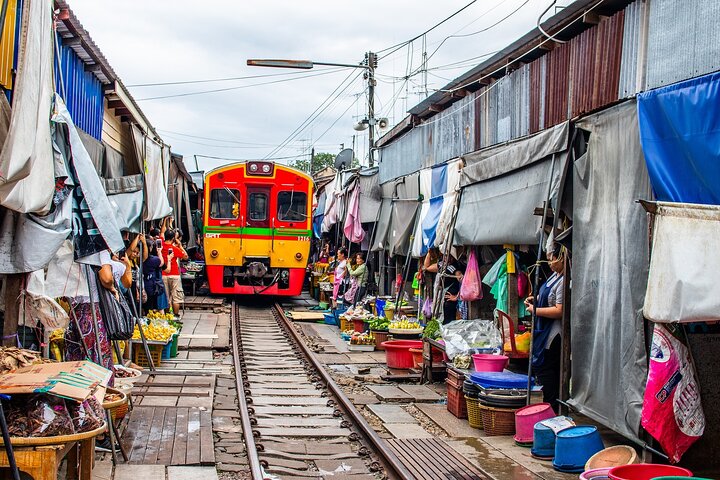
Maeklong Railway Market is touristy. Let me be specific about what that means: the narrow aisles are packed with tour groups, vendors sell tourist things, and the moment the train is announced is half performance, half genuine commerce. None of that is why it still works.
I was standing on the platform — not the tracks, because the vendors had already yelled at two tourists for being on the rails — when the train came through at walking speed. So close I could have touched it. The awnings over each stall folded back like an accordion in maybe four seconds, the fruit baskets slid two inches back from the edge, and the entire market held its breath. Then the train passed, and in another ten seconds the awnings snapped back out, the vendors resumed mid-sentence, and the aisles reopened. The folding is fast, but it's not faked — the train is a real working commuter service that runs through the market several times a day. According to local guides I've spoken to, the exact times shift slightly from the published schedule, so confirm with your guide on the morning of your visit or ask at the station when the next passage is.
That's the first moment. The second is at the top of Erawan Falls.
Erawan National Park, about three hours west of Bangkok in Kanchanaburi province, holds a seven-tiered waterfall that most organized day trips only see to tier three or four. The climb from tier 6 to 7 is steep — 30 minutes of limestone steps with a rope handrail, some of it slick. I was the only person up there when I went, and the waterfall at tier 7 is smaller than the lower tiers, but the pool is deep and the fish come right up to your calves and nibble. That sounds like a tourist brochure. It is not. The skin on my ankles was soft from the sulfur and the fish were genuinely startling the first time they touched me. There is no one selling you anything up there. There is no music. There is just the jungle and the water.
Skip the upper Erawan tiers if steep steps, a rope handrail, or a sustained climb are unsuitable for your mobility or fitness — the descent is also slippery and you'll be relying on that rope. For a more accessible version of the same idea, stick to tiers 1–3 where almost every organized group stops.
If you only have time for one and you want the genuine Maeklong moment without renting a car, the Maeklong Railway Market and Damnoen Saduak combined tour handles both — the train passage timing and the longtail boat into the canal — in one long day.
Maeklong Railway Market and Damnoen Saduak Floating Market Day Trip
Maeklong Railway Market and Damnoen Saduak Floating Market Day Trip
From THB 1,080 · Price checked: Aug 2026
Honest take: the railway market and the floating market are an hour apart, and on your own that's a logistical headache this tour solves in one vehicle. The Damnoen Saduak canal ride is the most tourist-oriented thing you'll do in Bangkok — accept that going in and you'll enjoy the boats more.
Check Availability →What Really Surprised Me About Bangkok
Nothing. No boats, no food stalls, no tourists. The canal at Amphawa was empty except for a single longtail boat tied up to a wooden post. A shopkeeper saw me looking confused and just shook her head. I had ignored the Friday-Sunday-only schedule. The market wasn't quieter on a Tuesday morning — it was closed.
Amphawa is a real floating market, run mostly by families who've been working that canal for generations, and on Friday evening and weekends it's the busiest, most enjoyable food market within reach of Bangkok. Firefly boat tours leave after dark. Seafood stalls line the canal. Locals eat there. The difference from Damnoen Saduak is the difference between a market that serves its neighborhood and a market that serves its tour buses. Skip Amphawa Monday through Thursday because the market is closed, not merely quiet — and a closed market isn't a market, it's a canal with a few parked boats.
Damnoen Saduak, by contrast, never closes. It is also densely, openly tourist-oriented — the boats are tourist boats, the vendors sell tourist things, the paddlers wear conical hats and pose for photos. But the boats navigating the narrow klongs, the wooden paddlers working the whole time, the sheer density of commerce on the water — it is genuinely unlike anything you've seen if you've never been to a canal market before. Get there by 7:30am and leave by 9am. By 10am the longtail boat queues are 45 minutes deep and the klongs are jammed. The early window is the difference between a tolerable experience and a miserable one.
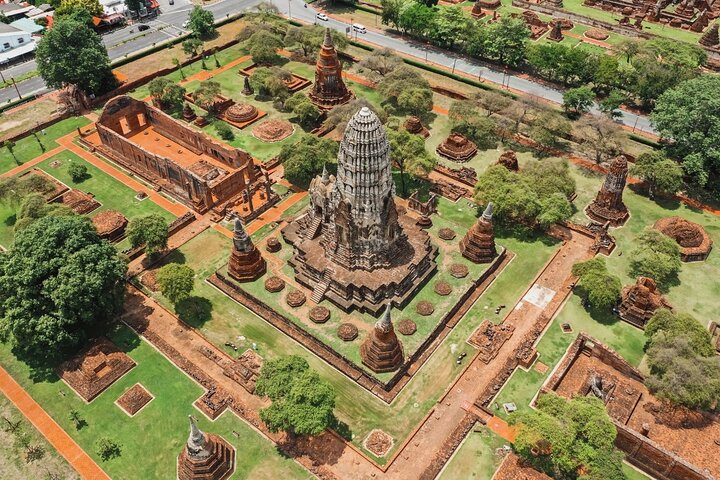
For Ayutthaya, the surprise is that it still works despite the tour buses. According to the Tourism Authority of Thailand's Discover Thailand pages, Ayutthaya was the capital of Siam from 1350 to 1767, and the historical park is a UNESCO World Heritage site. What that doesn't tell you is that Wat Mahathat — the one with the Buddha head tangled in tree roots — is the most photographed spot in the entire park and the crowd at 10am reflects that. Go at 7:30am and you will have the head in the roots almost to yourself. Go at noon and you'll be queuing to stand in the frame. Wat Phra Si Sanphet, the three bell-shaped chedis, is the quieter temple — fewer tourists, more space to actually look at the brickwork. My full Ayutthaya guide is here if you want the temple-by-temple breakdown.
Niran Chantra's Insider Tips for Getting It Right
Timing is everything in Bangkok's day trips, and almost every mistake I've made has been a timing mistake.
For Ayutthaya, visit on a weekday. Weekends and Thai public holidays bring domestic tour groups in numbers that turn Wat Mahathat into a queue. The 6:40am train from Bangkok's old Hualamphong station (now Bangkok Railway Station / Krung Thep Aphiwat depending on the operator) is the cheapest way there and the most authentic — local commuters, no commentary, three-hour ride. Confirm the schedule the day before because it does shift. Group sizes range from 8–12 people (small-group vans) to 40+ (large coach). After a couple of years of post-COVID operations, smaller groups have become the norm but check recent reviews for current sizes. If you're working through Thailand's UNESCO sites, Ayutthaya pairs naturally with Sukhothai on a longer trip.
For Damnoen Saduak, the 7:30am–9am window is non-negotiable if you want to enjoy it. The canal turns into a parking lot after that. For Maeklong, stand on the platform, not the tracks. The vendors will shout at you, and they'll be right.
For Kanchanaburi, accept that most day trips don't include Hellfire Pass — it requires an overnight stay or a dedicated second day. If Hellfire Pass matters to you, plan for two days. The Death Railway train from Kanchanaburi to Nam Tok is a real working train that local commuters use; the bridge section through the mountains is genuinely scenic. The name comes from the people who died building it. You can enjoy the scenery and know what you're looking at.
For Amphawa, go Friday evening through Sunday. Anything else is a wasted trip. Floating market tour options are here.
If you're comparing group tours, look closely at what's actually disclosed: pickup zone (central Bangkok or further out?), vehicle type (van with A/C or large coach?), group size, and time at each stop. Tours that don't disclose these are the ones most likely to rush you through three temples in two hours. The Ayutthaya day trip from Bangkok I booked last year had a clear itinerary with hotel pickup and a small van — those details were visible on the listing before I committed, which is what you want. Skip any tour that doesn't tell you its group size, vehicle type, pickup zone, or time at each stop before you book. My running list of the better Bangkok day tours is here.
What I Wish I'd Known Before I Went
The handlebars were too hot to touch without gloves. I was cycling around Ayutthaya Historical Park last April — 38°C, no shade between the major temple sites — and by the second temple the metal handlebars on the rental bike had absorbed enough sun to blister my palms through a thin layer of sweat. Between Wat Mahathat and Wat Phra Si Sanphet I stopped at a 7-Eleven and drank two bottles of water standing in the air conditioning. The guide handed out cold towels at every stop. I still came back dehydrated.
The Thai Meteorological Department's seasonal guidance is direct: November through February is the cooler period for an Ayutthaya visit, around 25–32°C and dry. March through May can reach 35–40°C. June through October is monsoon season — afternoon rain most days, but morning tours are still viable and you'll find the best deals. April 13–15 (Songkran, the Thai New Year water festival) is fun but tour logistics get disrupted and the roads around Ayutthaya can be closed for water fights. November's full moon is Loy Krathong — Ayutthaya is exceptional for the festival, but book weeks ahead.
If you're doing this between March and May, the small-group air-conditioned van tour is worth every baht over a cycling tour. Thai lunch on day tours is typically a set-menu at a restaurant near the attraction — pad thai, green curry, tom yum, a fruit plate, sometimes a buffet. Tell your guide in advance if you're vegetarian or have allergies. Skip an Ayutthaya cycling tour from March through May if you are not prepared for extreme heat; choose air-conditioned transport instead. The temples aren't going anywhere — your hands might, if you're not careful.
Explore More
Related comparisons and guides:
Frequently Asked Questions
How many days do I need in Bangkok to do a day trip? You need at least one full clear day plus a day before to confirm timing and at least one evening after to recover. Most travelers do Bangkok for 3–4 nights and take one day trip from there.
What is the best time of year to visit Ayutthaya from Bangkok? November through February is the coolest and driest, around 25–32°C. March through May reaches 35–40°C and is physically demanding. June through October is monsoon season with afternoon rain but the best tour deals.
Is Amphawa floating market open every day? No. Amphawa is open Friday evening through Sunday and closed Monday through Thursday. Going on a weekday means an empty canal and no market.
Can you see Hellfire Pass on a Kanchanaburi day trip from Bangkok? No. Hellfire Pass is further along the Death Railway and most Bangkok day trips don't have time for it. It requires an overnight stay in Kanchanaburi or a dedicated second day.
What is the best time to visit Maeklong Railway Market? Train passage times shift slightly from the published schedule, so confirm the morning of your visit with your guide or at the station. Most trains pass between 8am and 4pm. Stand on the platform, not the tracks.
Are Ayutthaya day trips suitable for children? Most are, especially the small-group van tours. Cycling tours are not suitable for young children or in the March–May hot season. Bring water, sun protection, and modest clothing for temple visits.