Bangkok Day Trips by Season: Heat, Rain, and Timing
We earn a commission when you book through our links on Viator (PID P00299531), at no extra cost to you. This is how we keep the site free. Learn more →
Bangkok day trips run all year, and the calendar decides whether the day feels comfortable or like a slog. The destinations do not change: Ayutthaya's ruins and Kanchanaburi's river sites stay open through heat and through rain. What changes is the hour you leave, how long you can stand outside without wilting, and how many people you share a photo frame with at the famous stops.
Bangkok Day Trips by Season: What Changes
Three seasons shape a day trip out of Bangkok. November through February is cooler and dry, and it is peak season, so book ahead and expect crowds at major sites. March through May is the hottest period, when early morning visits are practical. June through October is monsoon, with afternoon rain most days, and morning tours remain a practical option.
That pattern decides almost every planning question people bring to a Bangkok day trip. In the cool dry months a full outdoor day works the way the itinerary promises, which is why those months fill up first and why an unbooked Saturday in January is a gamble. In the hot months the same itinerary demands a departure time you might not love. According to the Tourism Authority of Thailand's Discover Thailand destination pages, provincial details and festival calendars are published per province, so check the dates for Ayutthaya and Kanchanaburi Province before you lock a day rather than after.
One honest caveat about peak season: comfort and quiet do not arrive together. Skip the November to February window if empty ruins matter more to you than a pleasant temperature, because you will have company at every major stop.
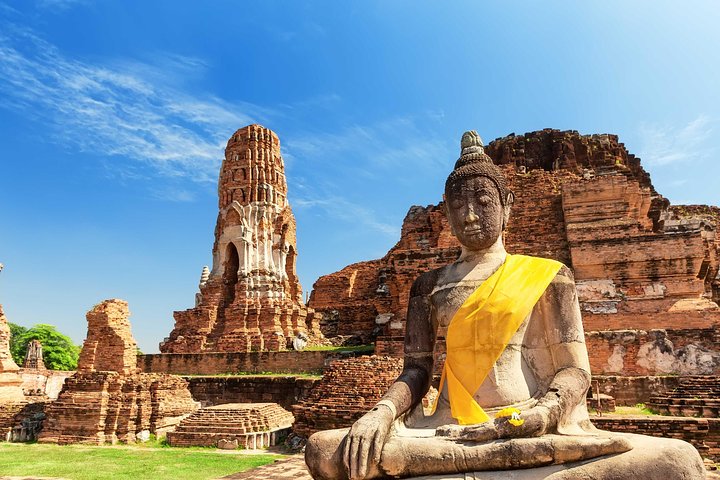
Ayutthaya UNESCO Temples Small Group: Full Day Tour From Bangkok: Made for Peak Season
A full day from Bangkok to Ayutthaya, the former capital of Siam and a UNESCO World Heritage site, moving through the temple ruins and Buddha statues of Ayutthaya Historical Park with an English-speaking guide. The commentary covers the city's founding, its golden age, and its fall, and that framing is the difference between photographing old brick and understanding what collapsed here. The day is spent outdoors between ruins, which is exactly why the cooler months flatter it.
Not the right pick for travellers who want to set their own pace at each temple, since a guided small group moves as a group.
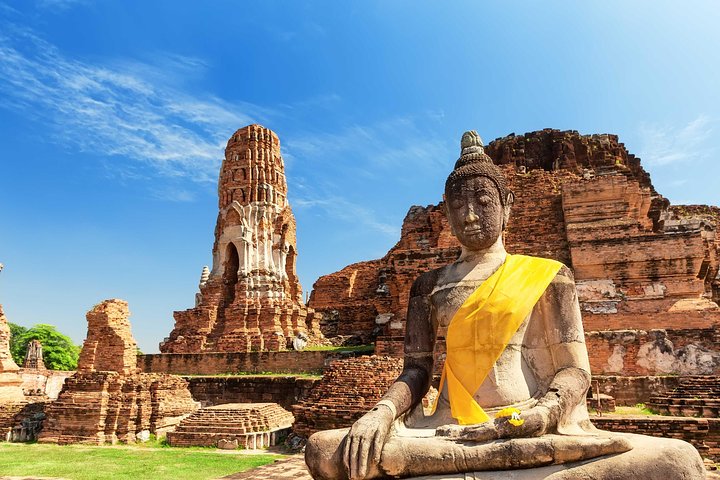
Ayutthaya UNESCO Temples Small Group : Full Day Tour From Bangkok
From $29.96 · Price checked: Aug 2026
Best for: Travelers who want a guided small group day among Ayutthaya's temple ruins with an English-speaking guide.
Not for: Travelers who prefer a private guide and a route of their own choosing.
A full day from Bangkok to Ayutthaya, the former capital of Siam and a UNESCO World Heritage site, visiting temple ruins and Buddha statues within the Ayutthaya Historical Park. An English-speaking guide covers the city's founding in 1350, its golden age, and its fall.
Check availabilityExternal booking on Viator · pricing and cancellations handled by Viator
The Month You Book Changes Which Itinerary Earns the Day
Low season is not a reason to cancel a day trip. It is a reason to take a morning departure and choose an itinerary that holds up if the sky opens later. June through October brings afternoon rain most days, and morning tours remain a practical option, which turns the rain question into a scheduling decision instead of a cancellation decision.
Water-and-history days and pure temple days age differently across the calendar. The Thai Meteorological Department publishes Thailand's monsoon and storm information in English, and it is the source worth reading the night before, not a forecast app aggregating someone else's model.
Kanchanaburi Full Day Tour: River Kwai and Erawan Falls: Surprisingly Great in Low Season
A full day in Kanchanaburi Province taking in the JEATH War Museum and the Bridge on the River Kwai, then Erawan National Park with its tiered waterfalls, walking trails, and natural pools. The museum and the bridge are war sites first, and the tour treats them that way: this is Burma Railway history, and the quiet at the bridge is appropriate rather than atmospheric. The waterfall half gives the day somewhere to go afterwards.
Park conditions and entry requirements sit with the Department of National Parks, Thailand, which publishes national park information including entry fees, so confirm Erawan's status there before a wet-season booking.
This combination is not for travellers who want war history alone or waterfalls alone, because the day gives roughly equal weight to both and the pace reflects that split.
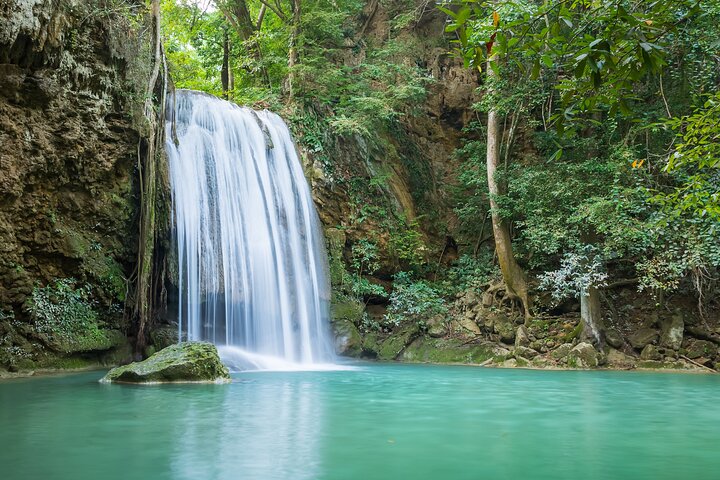
Kanchanaburi Full Day Tour: River Kwai and Erawan Falls
From $81.57 · Price checked: Jul 2026
Best for: Travelers who want Burma Railway history and waterfall time combined in one full day from Bangkok.
Not for: Travelers who would rather not spend the day on wartime history sites.
A full day in Kanchanaburi Province taking in the JEATH War Museum and the Bridge on the River Kwai, then Erawan National Park with its seven tiers of waterfalls, walking trails, and natural pools.
Check availabilityExternal booking on Viator · pricing and cancellations handled by Viator
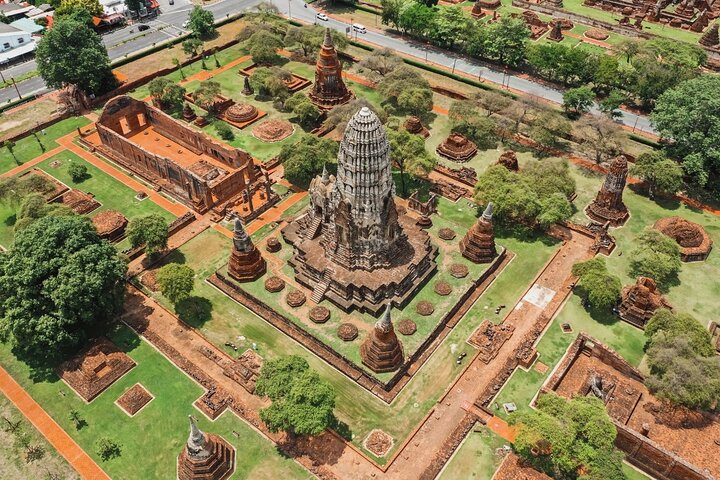
UNESCO's Ayutthaya Historical Park: Full-Day Tour from Bangkok: When You Want Bang Pa-In Too
A small group day covering Wat Mahathat, Wat Chaiwatthanaram, Wat Yai Chai Mongkol, and Bang Pa-In Royal Palace, with commentary on Thai Buddhism at the temples. Wat Mahathat holds the Buddha head grown into the tree roots, and in peak season you will be sharing that frame. Bang Pa-In is the reason to choose this version: a royal palace complex reads very differently from a ruin field, and the contrast gives the day some variety when temple fatigue sets in around stop three.
Two-way transfers run from Bangkok hotels in selected areas or from National Stadium Station, so confirm your address qualifies before you assume a hotel pickup.
UNESCO's Ayutthaya Historical Park: Full-Day Tour from Bangkok
From $30 · Price checked: Jul 2026
Best for: Travelers who want Bang Pa-In Royal Palace included alongside Ayutthaya's temple ruins.
Not for: Travelers who want the historical park only, without a palace stop.
A small group day trip to Ayutthaya covering Wat Mahathat, Wat Chaiwatthanaram, Wat Yai Chai Mongkol, and Bang Pa-In Royal Palace, with commentary on Thai Buddhism at the temples. Two-way transfers run from Bangkok hotels in selected areas or from National Stadium Station.
Check availabilityExternal booking on Viator · pricing and cancellations handled by Viator
Packing for Heat, Rain, and a Full Day Outdoors
Pack for the season, not the destination. March through May wants sun cover, more water than you think, and an early start, since early morning visits are practical when heat is a concern. November through February is the forgiving window, and it is still a full day outside.
Temple days carry a clothing question that catches people at the gate. The Tourism Authority of Thailand publishes guidance on visiting Thai temples, and reading it takes two minutes against the cost of standing outside a wat you travelled an hour to see. Cover-ups that pack small solve this without ruining a hot-weather outfit.
The Kanchanaburi day adds a second packing decision, because Erawan National Park includes natural pools and walking trails. Swimwear and a quick-dry towel are worth the bag space if you intend to use the water. Leave both at the hotel if you booked that day for the Burma Railway history and plan to stay dry, since nothing in the itinerary requires you to get in.
One more thing that season does not change: these are long days out of Bangkok, and the return leg lands you back in city traffic. Anyone hoping to squeeze a temple day into an afternoon should look at a half-day option instead.
What to Check Before Booking
Check four things before you pay: your pickup point, your departure time, the season you are booking into, and what the site or park requires on the day. The two Ayutthaya options on this page cover overlapping ground with different stops, so the itinerary list matters far more than the destination name on the booking button.
Pickup is the detail people skip. One Ayutthaya option runs two-way transfers from Bangkok hotels in selected areas or from National Stadium Station, and a hotel outside those areas turns a convenient door pickup into a morning taxi you had not budgeted for. Confirm the meeting arrangement in writing.
Departure time is the lever that does the real work across the calendar. In the hottest months, early morning visits are practical, and in the monsoon months, morning tours remain a practical option. Both statements point the same direction: an early start protects the day from the season it sits in.
Booking lead time is the peak-season trap. November through February is peak season, and the guidance is plain: book ahead and expect crowds at major sites. Same-week availability in January is not something to plan around.
Site requirements are the last check, and they vary by type of destination. Erawan sits inside a national park, so the Department of National Parks, Thailand is the authority for park access and fee information, while the Tourism Authority of Thailand covers festival dates that can reshape crowd levels at Ayutthaya on a specific weekend. If you are still deciding between seasons, our Ayutthaya Historical Park by season guide and the broader World Heritage sites by season guide compare the same trade-offs site by site, and the Bangkok day tours index plus the Bangkok guide cover what to do with the days in between.
Skip all of these day trips if your Bangkok schedule has only a half day free, because each one runs a full day and the return drive is part of the commitment.
Explore More
Related comparisons and guides:
Frequently Asked Questions
When is the coolest time for a Bangkok day trip?
November through February is the cooler, dry season, and it suits itineraries that keep you outdoors for most of the day. It is also peak season, so treat the comfort and the crowds as a package deal.
Are the monsoon months worth booking a day trip in?
June through October brings afternoon rain most days, and morning tours remain a practical option, so the wet season affects your departure time more than your destination choice. Book a morning start and keep the afternoon flexible.
Which of the two Ayutthaya tours should I choose?
Pick the option including Bang Pa-In Royal Palace if you want variety beyond ruins, and pick the small group temple-focused day if you would rather spend the whole day inside Ayutthaya Historical Park with an English-speaking guide.
Do I need to book ahead for a day trip from Bangkok?
In peak season, yes. The guidance for November through February is to book ahead and expect crowds at major sites, so leaving it to the day before narrows your options considerably.
Where do the Ayutthaya transfers depart from?
The Ayutthaya Historical Park tour runs two-way transfers from Bangkok hotels in selected areas or from National Stadium Station. Confirm your hotel falls inside the pickup zone rather than assuming door service.
Can I combine the River Kwai and Erawan Falls in one day?
That is exactly what the Kanchanaburi full-day tour does, pairing the JEATH War Museum and the Bridge on the River Kwai with Erawan National Park. Check park conditions with the Department of National Parks before a wet-season date.
Written from Bangkok, Thailand.

Niran Chantra
Bangkok local · 300+ day trips across Thailand