Ayutthaya Heritage Light and Tour Access: Seasonal Planning for Temple Day Trips
We earn a commission when you book through our links on Viator (PID P00299531), at no extra cost to you. This is how we keep the site free. Learn more →
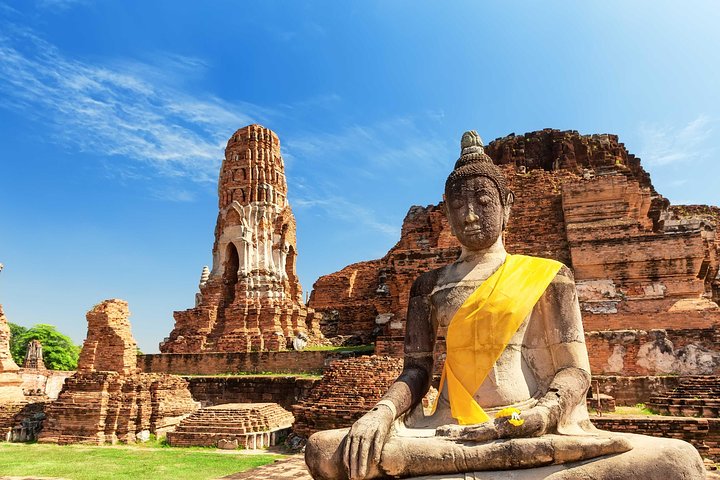
Ayutthaya Historical Park is a UNESCO World Heritage site, and the ruins sit in open ground with very little shade between them.
What follows separates two things that get blurred together on booking pages. Light and weather belong to the site and the season. Access, pickup points, and what is included belong to the individual tour listing.
Ayutthaya in Every Season: What Changes
Three seasonal windows shape an Ayutthaya visit. November to February is cooler and dry, and it is peak season, so book ahead and expect crowds at major sites. March to May is the hottest period. June to October is monsoon, with afternoon rain most days. The ruins stay open across all three; what changes is how long you can comfortably stand in them.
Peak season is the window where a full-day itinerary works without much negotiation. The trade is company: the well-known temples carry their peak-season crowd, and a sunset-focused plan needs the listed tour access verified before you commit, since not every day trip is timed to keep you at a temple late.
The Tourism Authority of Thailand publishes destination and festival information for Thai provinces at its Discover Thailand pages, which is the place to check whether a festival date overlaps your visit and thickens the crowd further. For month-by-month planning specific to the park itself, our Ayutthaya Historical Park seasons guide goes deeper than this page does.
Skip the November to February window if your priority is quiet frames over comfortable temperatures.
UNESCO's Ayutthaya Historical Park: Full-Day Tour from Bangkok: A Strong Peak-Season Fit
This small group day trip covers Wat Mahathat, Wat Chaiwatthanaram, Wat Yai Chai Mongkol, and Bang Pa-In Royal Palace, with commentary on Thai Buddhism at the temples. Two-way transfers run from Bangkok hotels in selected areas or from National Stadium Station. Wat Chaiwatthanaram in Ayutthaya is especially beautiful at sunset, and its inclusion here is one reason the itinerary rewards the cooler months, when a long day outdoors is sustainable.
Bang Pa-In Royal Palace is the dividing line. It is a palace complex, not a ruin field, and it adds a different kind of stop to a temple day. If a royal palace visit reads as filler to you, this itinerary will feel padded and a temples-only day is the better match.
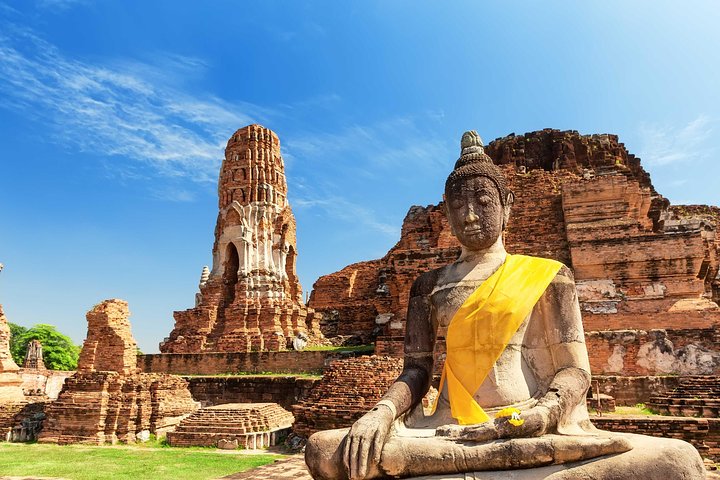
UNESCO's Ayutthaya Historical Park: Full-Day Tour from Bangkok
From $30 · Price checked: Jul 2026
Best for: Travelers who want Bang Pa-In Royal Palace included alongside Ayutthaya's temple ruins.
Not for: Travelers who want the historical park only, without a palace stop.
A small group day trip to Ayutthaya covering Wat Mahathat, Wat Chaiwatthanaram, Wat Yai Chai Mongkol, and Bang Pa-In Royal Palace, with commentary on Thai Buddhism at the temples. Two-way transfers run from Bangkok hotels in selected areas or from National Stadium Station.
Check availabilityExternal booking on Viator · pricing and cancellations handled by Viator
The Month You Choose Changes What You Photograph
Low season is not a downgrade for heritage sites. Monsoon months bring afternoon rain most days, which leaves mornings as a practical option for temple access, and wet brickwork under moving cloud gives you a different park than the flat, bright one you get in January. The cost is schedule risk, not a closed site.
March to May is the hottest period, and the honest planning answer there is to schedule heritage walking early when heat is a concern. The sunset note about Wat Chaiwatthanaram is site context, not a guarantee that any particular tour will have you standing there at the right hour, so confirm the return timing on the listing rather than assuming it.
The Thai Meteorological Department is the source to check for monsoon conditions and storm warnings in the days before you travel. General advisories for the country sit with the Tourism Authority of Thailand.
Book a November to February date instead when your trip has no slack in it, a single Ayutthaya day, no room to shift it, and a strong preference for dry ground underfoot.
Ayutthaya UNESCO Temples Small Group: Full Day Tour From Bangkok: Works Well in Low Season
This is a full day from Bangkok to Ayutthaya, the former capital of Siam and a UNESCO World Heritage site, visiting temple ruins and Buddha statues within the Ayutthaya Historical Park. An English-speaking guide covers the city's founding in 1350, its golden age, and its fall. Ayutthaya was the capital of Siam from 1350 to 1767, destroyed by the Burmese army, and that ending is visible in the ruins you are standing in, which is exactly why a guide who explains it earns their place on a wet morning.
The narrower focus helps in monsoon months. A temples-only day inside the historical park keeps your stops closer together, so a rain break costs you less.
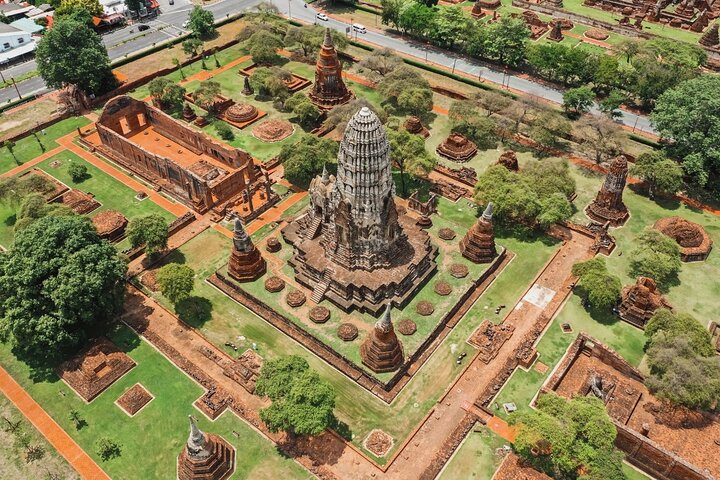
Ayutthaya UNESCO Temples Small Group : Full Day Tour From Bangkok
From $29.96 · Price checked: Aug 2026
Best for: Travelers who want a guided small group day among Ayutthaya's temple ruins with an English-speaking guide.
Not for: Travelers who prefer a private guide and a route of their own choosing.
A full day from Bangkok to Ayutthaya, the former capital of Siam and a UNESCO World Heritage site, visiting temple ruins and Buddha statues within the Ayutthaya Historical Park. An English-speaking guide covers the city's founding in 1350, its golden age, and its fall.
Check availabilityExternal booking on Viator · pricing and cancellations handled by Viator
Ayutthaya Temples Tour from Bangkok with Lunch: When Bundled Inclusions Simplify the Day
This guided tour covers the temple ruins of Ayutthaya, the capital during the golden age of Siam, with all entrance fees and lunch at a local restaurant included. A river prawn option is available at the restaurant at additional cost. The appeal is administrative: entrance fees to individual temples inside the park are handled for you, and a sit-down meal is built into the schedule instead of improvised in the heat.
If you would rather eat where you like and pay your own way into each temple, an inclusive format removes a choice you wanted to keep. Our heritage site cost guide covers how to compare included and excluded items across listings without guessing.
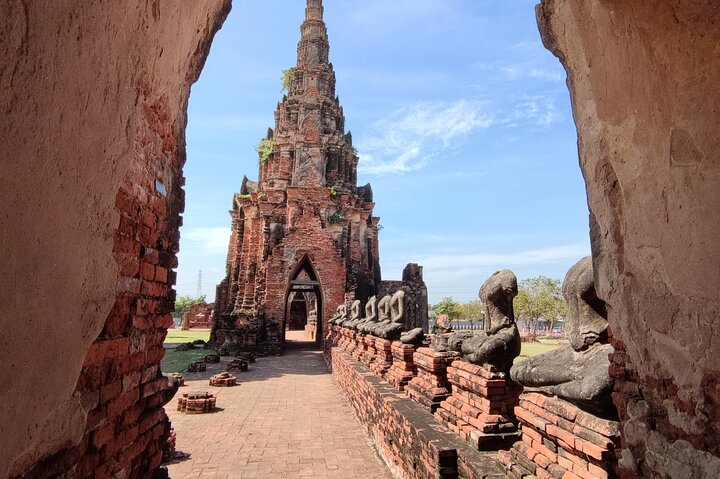
Ayutthaya Temples Tour from Bangkok with Lunch
From $34.33 · Price checked: Aug 2026
Best for: Travelers who want entrance fees, a guide, and lunch bundled into an Ayutthaya temple day.
Not for: Travelers who prefer to arrange their own meals and entry.
A guided tour of the temple ruins of Ayutthaya, the capital during the golden age of Siam, with all entrance fees and lunch at a local restaurant included. A river prawn option is available at the restaurant at additional cost.
Check availabilityExternal booking on Viator · pricing and cancellations handled by Viator
Packing for Heat, Rain, and Open Ruins
Pack for a site with almost no shade, a dress code, and a lot of walking on uneven brick. Covered shoulders and knees for temple areas, shoes you can climb steps in, a hat, water, and sun protection are the baseline in every season. In monsoon months add rain cover you can carry all day.
A shoulder-covering layer in hot months sounds miserable until you realise it also keeps the sun off, which is a genuine advantage in a park where you walk between ruins in the open.
For monsoon dates, a poncho or packable jacket is more useful than an umbrella when you are moving between stops in a group. If you will not carry a daypack with water and a rain layer, plan a morning-only visit instead of committing to a full-day itinerary, because the afternoon is where an underpacked day turns unpleasant.
What to Check Before Booking
Four things decide whether an Ayutthaya day trip matches your plan: the pickup arrangement, the exact temple list, what the price includes, and the return timing.
Start with pickup. One of these itineraries runs two-way transfers from Bangkok hotels in selected areas or from National Stadium Station, and "selected areas" is doing real work in that sentence. Confirm your hotel address is covered before you book, not after. Our Bangkok seasonal guide is worth a look if you are still deciding where in the city to base yourself.
Then read the temple list against what you came for. A day that includes Bang Pa-In Royal Palace is a different day from one that stays inside the historical park. After that, check inclusions, since entrance fees and lunch are itemised differently across listings, and one of these tours states that entrance fees and lunch are included while a river prawn option costs extra.
Last, match the season to the format. Choose a shorter or earlier-starting option if you are visiting between March and May and heat affects you, and treat any sunset plan as something to verify on the listing rather than assume. For a broader view of how we compare heritage day trips, see our World Heritage tour guide.
Explore More
Related comparisons and guides:
Frequently Asked Questions
Is Ayutthaya worth visiting during the monsoon season?
Yes, with a morning schedule. June to October brings afternoon rain most days, so the ruins remain accessible in the earlier hours and the crowd pressure of peak season is lower.
What time of day is better for photographing Ayutthaya's temples?
Early morning gives you cooler air and thinner crowds, while Wat Chaiwatthanaram in Ayutthaya is especially beautiful at sunset. Confirm on the listing whether your tour is still in the park at that hour.
Do I need to cover my shoulders and knees at Ayutthaya?
Temple areas expect covered shoulders and knees, so bring a light long-sleeved layer even in hot months. It doubles as sun protection in a park with very little shade.
Should I pick a tour that includes Bang Pa-In Royal Palace?
Include it if you want a royal palace complex alongside the ruins and accept a longer, more varied day. Leave it out if your interest is the temple ruins themselves.
How much history should I know before going?
Ayutthaya was the capital of Siam from 1350 to 1767, destroyed by the Burmese army, and knowing that single fact changes how the ruins read. A guided tour with an English-speaking guide fills in the rest on site.
Can I visit Ayutthaya from Bangkok without a guided tour?
You can, but you then handle transport, temple entry, and timing yourself in whatever weather the day delivers. A guided day trip trades that flexibility for a fixed schedule and someone explaining what you are looking at.
Written from Bangkok, Thailand.
Niran Chantra
Bangkok local · 300+ day trips across Thailand