Bangkok vs Phuket Day Trips: Compare Bases, Routes, and Planning Trade-offs

We earn a commission when you book through our links on Viator (PID P00299531), at no extra cost to you. This is how we keep the site free. Learn more →
Bangkok and Phuket both function as day trip bases, and they point you in opposite directions. A Bangkok base sends you inland by road to markets and temple ruins. A Phuket base sends you offshore by boat to the Phi Phi Islands.
4 Viator day trips compared on this page
Bangkok and Phuket Point Your Day Trips in Opposite Directions
A Bangkok base means road days: floating markets, a railway market, and the temple ruins of Ayutthaya, reached by van with a guide and returned to the same hotel at night. A Phuket base means sea days: speedboat runs to the Phi Phi Islands, Maya Bay, and snorkeling stops in the Andaman Sea. Both are full-day commitments, but the fatigue is different.
Two logistics points shape the Bangkok side of this decision. Most Bangkok day trip tours include hotel pickup from central Bangkok areas. Most day tours from Bangkok depart 6-7am and return 5-7pm.
Before you commit to either base, the Tourism Authority of Thailand is the reference point for destination-level travel advisories, and the Thai Meteorological Department publishes the monsoon and storm warnings that decide whether a boat day happens at all.
Damnoen Saduak Floating Market and Maeklong Railway Market Tour
This one pairs a visit to Damnoen Saduak Floating Market with Talad Rom Hoop, the market that sits directly on the railway track where vendors pull back their awnings as the Bangkok to Maeklong train passes.
Damnoen Saduak itself has evolved into a tourist attraction, and the product record says so directly. Pass on this pairing if you want a market where local families do their weekly shopping, because that is not what either stop delivers. More context on the alternatives sits in our floating markets guide.

Damnoen Saduak Floating Market and Maeklong Railway Market Tour
From $33 · Price checked: Jul 2026
Best for: Travelers who want both markets and accept that Damnoen Saduak has evolved into a tourist attraction.
Not for: Travelers looking for a market that has stayed outside the tourist circuit.
A visit to Damnoen Saduak Floating Market followed by Talad Rom Hoop, the market sitting on the railway track where vendors pull back their awnings within seconds as the Bangkok to Maeklong train passes.
Check availabilityExternal booking on Viator · pricing and cancellations handled by Viator
Where a Bangkok Base Holds Up
Bangkok's strength as a base is that the day trips come to your door. Most Bangkok day trip tours include hotel pickup from central Bangkok areas, which removes the part of the morning where you are standing on a pavement at dawn trying to explain a meeting point to a taxi driver.
Most day tours from Bangkok depart 6-7am and return 5-7pm, so a Bangkok base suits travellers who treat the day trip as the main event and the evening as recovery. Leave Bangkok off your shortlist if you are staying outside the central pickup areas, because the included transfer is the thing holding the whole format together. Our Bangkok day tours overview lists what else runs on that same timetable.
Ayutthaya UNESCO Temples Small Group: Full Day Tour From Bangkok
Ayutthaya is the former capital of Siam, and Ayutthaya Historical Park is a UNESCO World Heritage site. This full-day small group tour covers temple ruins and Buddha statues inside the park with an English-speaking guide who walks through the city's founding, its golden age, and its fall.
Shade between temple structures is limited and the walking is spread across a full day, so this is a heat-exposure day rather than a relaxed one. The Tourism Authority of Thailand's destination directory is where to confirm province-level visitor information before you travel. Avoid booking this if your group will not stay with a guided small group pace for a full day, since the format is built around walking the park together. Our Ayutthaya day trip page goes deeper on the individual temples.
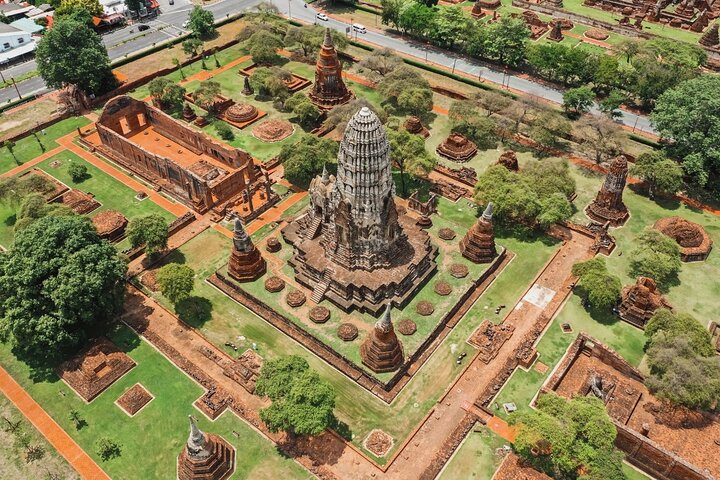
Ayutthaya UNESCO Temples Small Group : Full Day Tour From Bangkok
From $29.96 · Price checked: Aug 2026
Best for: Travelers who want a guided small group day among Ayutthaya's temple ruins with an English-speaking guide.
Not for: Travelers who prefer a private guide and a route of their own choosing.
A full day from Bangkok to Ayutthaya, the former capital of Siam and a UNESCO World Heritage site, visiting temple ruins and Buddha statues within the Ayutthaya Historical Park. An English-speaking guide covers the city's founding in 1350, its golden age, and its fall.
Check availabilityExternal booking on Viator · pricing and cancellations handled by Viator
How to Weigh One Base Against the Other
Choose the base that matches the day you want, not the city you want to sleep in. Neither base does the other's job, and no amount of planning makes a Bangkok van reach Maya Bay.
The useful test is what happens on a bad weather day. An inland temple or market day from Bangkok still runs in rain. A speedboat day from Phuket depends on sea conditions, which is why the Thai Meteorological Department's warnings belong in your planning rather than your post-mortem. Skip Phuket as your base if you cannot absorb a cancelled or rescheduled boat day without wrecking the rest of the itinerary.
Island Cruise from Phuket to Phi Phi Islands with Maya Bay Visit
A speedboat day out of Phuket with breakfast on the beach at Maya Bay, a swim stop at Pileh Lagoon, snorkeling stops, monkeys in their natural habitat, Viking Cave, and time on a private island to finish. The product record describes a smaller group than the large-boat alternatives, which changes how long you wait at each stop and how much of the beach you are sharing with your own party.
Phi Phi sits inside protected marine waters, and the Department of National Parks, Thailand is the authority for marine park entry fees and any seasonal access rules that apply on the day you sail. This trip is not a fit for travellers who dislike fast open-water boat transfers, since the speedboat format is what makes the stop list possible in one day.
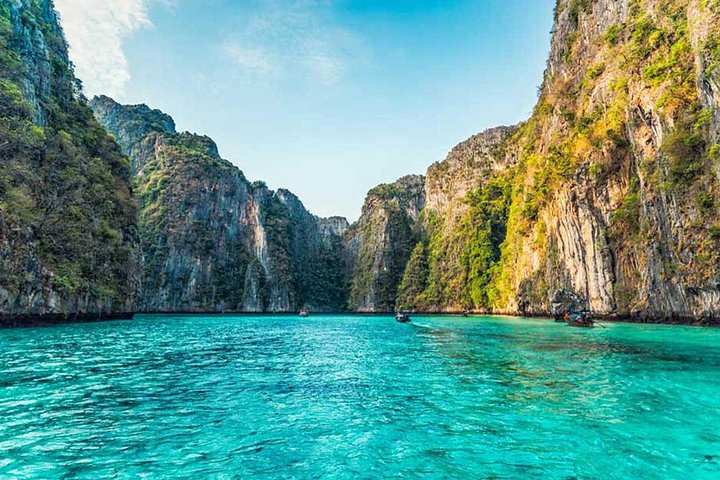
Island Cruise from Phuket to Phi Phi Islands with Maya Bay Visit
From $164.81 · Price checked: Aug 2026
Best for: Travelers who want a speedboat trip to Maya Bay with a smaller group, averaging 15 people and capped at 18.
Not for: Travelers visiting in August or September, when Maya Bay closes and Bamboo Island is visited instead.
A speedboat day from Phuket with breakfast on the beach at Maya Bay, a swim stop at Pileh Lagoon, two snorkeling stops, monkeys in their natural habitat, and Viking Cave, ending with time on a private island. Groups average 15 people and are capped at 18.
Check availabilityExternal booking on Viator · pricing and cancellations handled by Viator
Phi Phi Islands Snorkeling Focused on the Andaman Sea
The second Phuket option narrows the day around snorkeling in the Andaman Sea, with turquoise water, white sand beaches, and the location used in the film The Beach.
Comparing this against the other island runs out of Phuket is its own decision, and our Phi Phi versus James Bond Island comparison covers how those two routes differ. This booking does not suit non-swimmers or anyone travelling with people who will sit on the boat while the group is in the water, because the snorkeling is the day.
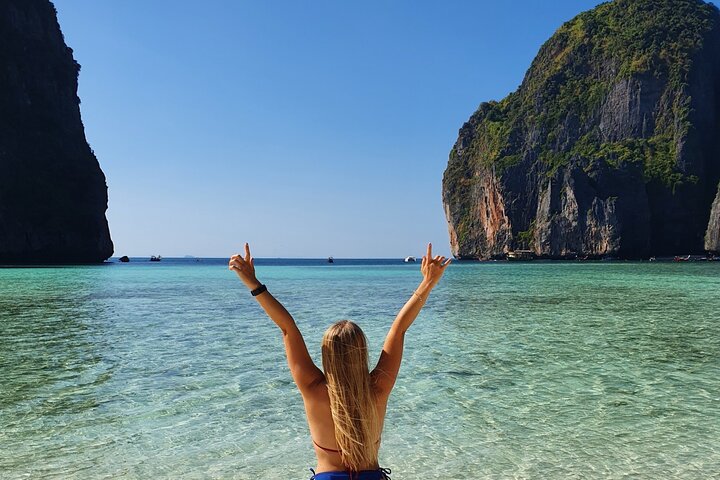
Best of Phi Phi Islands Snorkeling Tour from Phuket
From $71.39 · Price checked: Aug 2026
Best for: Travelers whose priority is snorkeling in the Andaman Sea around the Phi Phi Islands.
Not for: Travelers who would rather spend the day on beaches than in the water.
A day trip from Phuket to the Phi Phi Islands with snorkeling in the Andaman Sea, taking in turquoise water, white sand beaches, and the setting used in the film The Beach.
Check availabilityExternal booking on Viator · pricing and cancellations handled by Viator
What to Check Before Booking
Four checks separate a day trip that works from one that does not. Confirm your hotel falls inside the pickup zone, confirm you can live with the departure and return window, confirm sea and weather conditions for any boat day, and confirm marine park access rules for Phi Phi.
Most Bangkok day trip tours include hotel pickup from central Bangkok areas, which is useful information only if your accommodation is in one of those areas.
On the Phuket side, two external checks do the work. The Thai Meteorological Department is the source for monsoon and storm warnings covering the Andaman coast, and the Department of National Parks, Thailand is the source for marine park fees and closures. Our Phuket day trip guide keeps the island-side logistics in one place.
One planning error worth naming: booking a Bangkok base and a Phi Phi day in the same breath. If you want both categories, that is a two-base trip with a flight in the middle, and planning it as anything else produces a day that does not exist. This page is not the right reference if you have a single fixed base and no flexibility, since the comparison assumes you are still choosing.
Explore More
Related comparisons and guides:
Frequently Asked Questions
Should I base in Bangkok or Phuket for day trips?
Base in Bangkok for guided road days to markets and temple ruins, and in Phuket for boat days to the Phi Phi Islands.
What time do day tours from Bangkok start and finish?
Most day tours from Bangkok depart 6-7am and return 5-7pm.
Is Damnoen Saduak still worth visiting if it is a tourist attraction?
Damnoen Saduak has evolved into a tourist attraction, and the pairing with the Maeklong railway market is what carries the day.
Can I visit Ayutthaya on a day trip from Phuket?
No. The Ayutthaya small group tour on this page departs from Bangkok, as do the floating market and railway market runs. Reaching Ayutthaya from Phuket requires relocating to Bangkok first.
Which Phi Phi trip should I choose from Phuket?
Take the Maya Bay speedboat cruise if you want a varied stop list including Pileh Lagoon, Viking Cave, and private island time. Take the snorkeling-focused trip if your priority is sustained time in the Andaman Sea with a mask on.
Do I need to check anything official before a Phi Phi day trip?
Check the Department of National Parks, Thailand for marine park entry fees and seasonal access rules, and the Thai Meteorological Department for monsoon and storm warnings.
Written from Bangkok, Thailand.

Niran Chantra
Bangkok local · 300+ day trips across Thailand