Bangkok Day Trip Costs: Tour Prices and Extra Fees Explained
We earn a commission when you book through our links on Viator (PID P00299531), at no extra cost to you. This is how we keep the site free. Learn more →
Bangkok day trip pricing splits into three layers: the fare you pay at booking, the money that leaves your pocket during the day, and the cost of assembling the same route yourself. This page sorts out which Bangkok day trip costs are already covered by the booking and which ones land on you at the gate, at the table, or on the water.
What a Bangkok Day Trip Costs
Three numbers decide a Bangkok day trip budget: the tour fare, what you pay at each site, and what food costs. Booking a guided day collapses the first two into one charge on some products and only the first on others.
Ayutthaya can be done independently by train from Hualamphong Station (15-50 baht third class, 2 hours), a route covered by the Tourism Authority of Thailand's Discover Thailand destination pages. What that fare does not buy is a driver holding a vehicle between temple groups, an English-speaking guide explaining what you are looking at, or a plan for covering Ayutthaya Historical Park in a single day once you step off the platform.
Skip this format if you prefer setting your own pace at each ruin and staying until the light works.
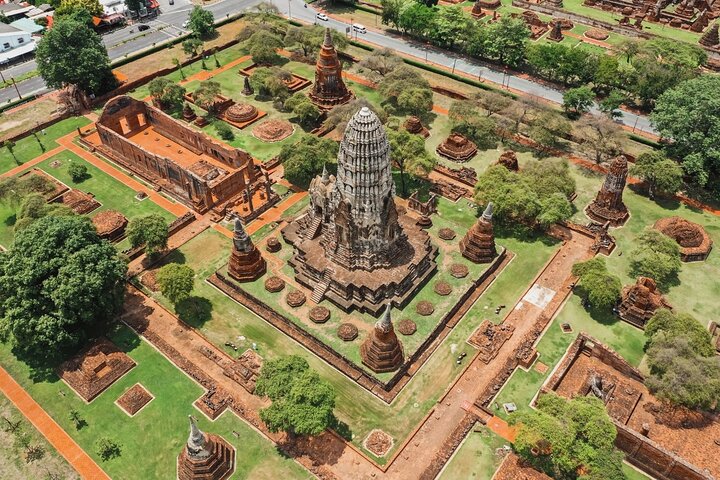
Ayutthaya UNESCO Temples Small Group: Full Day Tour From Bangkok: What the Small-Group Format Buys You
This is the straightforward guided version of the Ayutthaya day. A full day runs from Bangkok to the former capital of Siam, now a UNESCO World Heritage site, taking in temple ruins and Buddha statues inside Ayutthaya Historical Park. An English-speaking guide covers the city's founding, its golden age, and its fall, which is the part you cannot get from a train seat or a signboard. For a history-first traveller, the guiding is the product; the transport is the delivery mechanism.
Not for travellers who want a private vehicle and a schedule only they control. If your group is large enough to fill a car on its own, a small-group van is the wrong shape for your day.
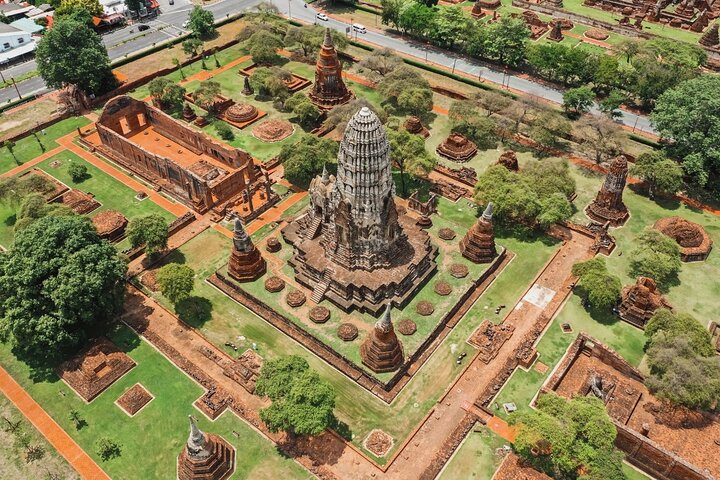
Ayutthaya UNESCO Temples Small Group : Full Day Tour From Bangkok
From $29.96 · Price checked: Aug 2026
Best for: Travelers who want a guided small group day among Ayutthaya's temple ruins with an English-speaking guide.
Not for: Travelers who prefer a private guide and a route of their own choosing.
A full day from Bangkok to Ayutthaya, the former capital of Siam and a UNESCO World Heritage site, visiting temple ruins and Buddha statues within the Ayutthaya Historical Park. An English-speaking guide covers the city's founding in 1350, its golden age, and its fall.
Check availabilityExternal booking on Viator · pricing and cancellations handled by Viator
Where the Money Goes on Bangkok Day Trips
Entry is the line item travellers underestimate. Ayutthaya temple entrance fees range from free to 50 baht per temple, which sounds minor until a guide walks you through several ruins across one day. A tour that includes all entrance fees converts that running tally into a figure you already settled at booking, and you stop reaching for your wallet at every gate.
Food is the second variable. Some Bangkok day trips price a sit-down meal into the fare and some leave you to find lunch on the road, and those two products are not comparable on headline price alone. A third category sits in between: the meal is included, but a premium dish is offered at the table for extra.
Optional vehicle class is the third. When a product offers a standard or upgraded car, the upgrade is a comfort purchase on a long driving day, not an access purchase; the itinerary does not change. Our Ayutthaya Historical Park cost breakdown goes further into per-site charges if you are pricing an independent day.
Book the entrance-fee-inclusive version instead when you would find it tedious to count out baht at four or five gates in 30-degree heat.
Ayutthaya Temples Tour from Bangkok with Lunch: Entry and Lunch in One Line Item
This is the bundled answer to the fee question. A guided tour of the Ayutthaya ruins, capital during the golden age of Siam, comes with all entrance fees and lunch at a local restaurant included. A river prawn option is available at the restaurant at additional cost, so budget a little discretionary money if that appeals and treat it as separate from your fare. For travellers who want one number to cover the whole day, this format removes the arithmetic.
Anyone who wants to choose their own lunch spot should book the other Ayutthaya format. A fixed restaurant stop is the trade you make for a fixed price.
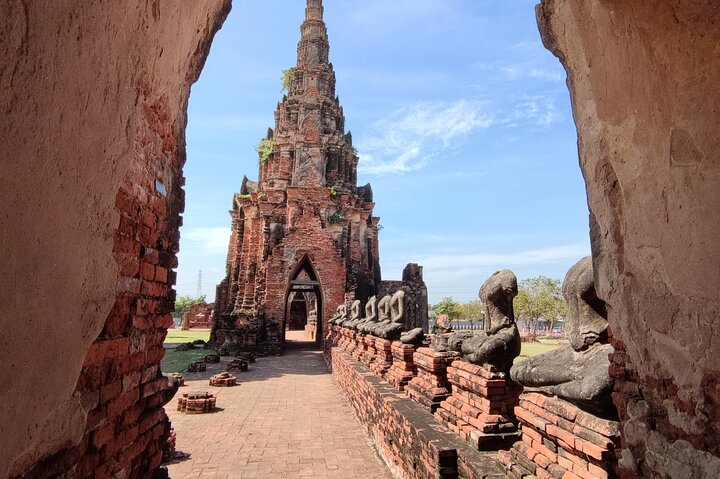
Ayutthaya Temples Tour from Bangkok with Lunch
From $34.33 · Price checked: Aug 2026
Best for: Travelers who want entrance fees, a guide, and lunch bundled into an Ayutthaya temple day.
Not for: Travelers who prefer to arrange their own meals and entry.
A guided tour of the temple ruins of Ayutthaya, the capital during the golden age of Siam, with all entrance fees and lunch at a local restaurant included. A river prawn option is available at the restaurant at additional cost.
Check availabilityExternal booking on Viator · pricing and cancellations handled by Viator
The Cost Surprises Worth Planning For
The surprises are not hidden charges. They are discretionary spends that arrive when you are already committed to the day: a premium dish at an included lunch, a vehicle upgrade chosen at booking, purchases from vendors on the water, and anything you buy at a farm stop.
A market day is where this matters most, because the itinerary itself is commercial. Weather is the other variable worth a check, since a boat ride and an open-air market both read differently in rain; the Thai Meteorological Department publishes the forecast and any storm warnings for the region.
Skip the market day if a boat ride surrounded by other boats sounds like a poor use of a morning.
Floating & Railway Market and Coconut Farm Tour [Optional Luxury]: Three Stops, One Fare
This one packs a market day into a single booking: a boat ride at Damnoen Saduak, a coconut sugar farm with sea salt production, and the railway market where the stalls pull back for the train. A standard or luxury vehicle can be selected at booking, which is the main cost lever on the product.
If you want a single temple-focused day, this is the wrong booking.
![Floating & Railway Market and Coconut Farm Tour [Optional Luxury] - photo](/images/110403P6.jpg)
Floating & Railway Market and Coconut Farm Tour [Optional Luxury]
From $84.26 · Price checked: Aug 2026
Best for: Travelers who want to choose between a standard and a luxury vehicle for a floating and railway market day.
Not for: Travelers who want only the markets without farm and production stops.
A market day covering a boat ride at Damnoen Saduak, a coconut sugar farm with sea salt production, and the railway market where stalls pull back for the train. Standard or luxury vehicle can be selected.
Check availabilityExternal booking on Viator · pricing and cancellations handled by Viator
Niran Chantra's Planning Notes for Getting It Right
A fare that excludes entry and lunch will be beaten on the headline number and then caught up during the day, which is why the inclusions line matters more than the price comparison. Read it first, then compare.
Carry small notes. Per-temple entry at Ayutthaya is charged site by site, and small denominations move you through gates faster than a large bill and a wait for change.
Pick your day by what you want to remember, not by what fits the calendar. Our Bangkok guide covers how these day trips sit alongside time in the city itself, and the wider Bangkok day tours page lists what else runs from the same pickup points.
Book the bundled Ayutthaya day instead when you are travelling with people who would rather not think about money once the van doors close.
What to Check Before Booking
Four checks cover almost everything that goes wrong with a Bangkok day trip budget: whether entrance fees are included, whether lunch is included and at what standard, whether a vehicle class choice affects the price you are quoted, and whether the pickup arrangement suits where you are staying. Confirm these on the product page before you pay.
"Entrance fees included" and "entrance fees where applicable" describe two different days at a site where fees are charged per temple. On the lunch line, check whether a premium option exists at additional cost so nothing at the table catches you cold.
Check your own tolerance for group travel too. If you are comparing costs across several World Heritage sites in Thailand and beyond, our World Heritage cost comparisons put the entry-fee picture side by side. For destination-level practicalities and current travel advisories, the Tourism Authority of Thailand is the source to check before you travel.
Walk away from any booking where the inclusions line does not spell out what happens about entry fees.
Explore More
Related comparisons and guides:
Frequently Asked Questions
Is the train to Ayutthaya cheaper than booking a tour?
The third-class train is the lowest-fare way to reach the city, but you still need to arrange transport between the ruins once you arrive and you get no guiding. A tour fare prices the driving, the routing, and the commentary you would otherwise assemble yourself.
Do Ayutthaya tours include temple entrance fees?
It depends on the product, which is why the inclusions line is the first thing to read. One of the two Ayutthaya days featured here states that all entrance fees and lunch are included; the other is a guided small-group day, so confirm the fee position on its card before booking.
What extra costs come up on a floating market day?
The discretionary spends are the vehicle class you choose at booking and anything you buy from vendors on the water or at the coconut sugar farm. Set a ceiling before the boat leaves, because deciding mid-canal is harder than it sounds.
Is the river prawn option worth adding at lunch?
River prawn is offered at the restaurant at additional cost on the lunch-inclusive Ayutthaya tour, so treat it as a separate purchase from your fare. Decide at the table on the day, with the knowledge that the offer is coming.
How much cash should I carry for a temple day?
Bring small denominations rather than one large note, since per-site entry is collected gate by gate and market stalls work the same way. Cards are not the currency of a ruins day.
Written from Bangkok, Thailand.

Niran Chantra
Bangkok local · 300+ day trips across Thailand