Bangkok Day Tours — A Complete Guide from Someone Who Has Done Them All
We earn a commission when you book through our links on Viator (PID P00299531), at no extra cost to you. This is how we keep the site free.
I Didn't Expect Bangkok to Feel Like This
I was standing on the platform, not the tracks, because the vendors had already yelled at two tourists for being on the rails. The train came through at walking speed at 8:27am, so close I could have touched it. The awnings over the vegetable stalls folded inward in a wave — one, two, three — and the moment the last carriage passed, the same vendors pulled them back out and resumed selling, the whole choreography taking maybe 30 seconds. That was my first Maeklong Railway Market trip, and it remains the one I recommend first to anyone visiting Bangkok.
Bangkok day trips can feel dramatically different from the city itself. Within 90 minutes you can be standing among 14th-century temple ruins, watching vendors pack up around a passing train, climbing limestone waterfalls, or walking the bridge built by prisoners of war. The Chao Phraya River connects much of this geography — some tours run boats from Bangkok to Ayutthaya — but most visitors do these trips by minivan because the road network is faster and cheaper.
Hotel pickup is standard on most Bangkok day tours, though coverage varies. Sukhumvit, Silom, and the riverside hotels are picked up first. Khao San Road and some Riverside properties sit on the wrong side of the river and sometimes carry a small surcharge or longer pickup window — always confirm at booking.
Skip a Maeklong-focused trip if dense crowds, tight spaces, and close proximity to a moving train make you uncomfortable. The platforms are narrow, the train passes within arm's reach, and you will be pressed against other tourists when the awnings fold.
Maeklong Railway Market and Damnoen Saduak Floating Market
The Maeklong + Damnoen Saduak combo tour (112650P14) is the one I send first-time visitors toward when they only have a single day to spare. The itinerary bundles the railway market with the floating market and usually includes hotel pickup, a set-menu Thai lunch, and a longtail boat ride through the canals at Damnoen Saduak.
What I evaluate before booking any Bangkok day tours: transport (minivan vs. bus), air-conditioning (non-negotiable in March–May), group size (12 or fewer is the sweet spot), pickup coverage (Sukhumvit/Silom yes, Khao San sometimes extra), departure time (6–7am start to beat traffic), and what's actually included (lunch, boat fees, entrance fees). If a tour lists only "transport and guide" with everything else on the side, I keep looking.
The reason this tour works for first-timers is timing. Damnoen Saduak before 9am has working vendors, soft light, and almost no tour buses. After 10am the canal fills with boats and the day trip becomes a queue.
The Moments That Made Bangkok day trips in Bangkok Worth the Trip
The climb from tier 6 to tier 7 at Erawan Falls is steep — 30 minutes of limestone steps with a rope handrail. I was the only person up there. The waterfall at tier 7 is smaller than the lower tiers but the pool is deep and the limestone is the color of wet honey. That half-hour alone on the upper trail is the moment I think about when someone asks whether Erawan is worth the drive from Bangkok.
It is, but only if you have at least three hours at the falls. A standard two-hour stop from a day tour generally limits visitors to tiers 1–4, which are crowded and not what makes Erawan special. The falls sit inside Erawan National Park, managed by the Department of National Parks, and the upper tiers require real effort — the steps are uneven, the rope is the only handrail, and the trail is exposed in the afternoon.
Ayutthaya is the other half of this conversation. According to the Tourism Authority of Thailand, Ayutthaya Historical Park is a UNESCO World Heritage site, and the ruins are spread across enough ground that a rushed day trip turns into a blur of temple selfies. The Bangkok to Ayutthaya drive takes about 80–90 minutes by highway, which means a 7am departure puts you at Wat Mahathat before the tour buses arrive.
Wat Mahathat is the one with the Buddha head in the tree roots — it's the most photographed spot in Ayutthaya and the crowd reflects that. Go early morning (7–8am) or accept that you'll be sharing the frame. Wat Phra Si Sanphet is quieter and, in my opinion, the more atmospheric of the two.
Skip the tier 7 climb if steep limestone steps, a rope handrail, or roughly 30 minutes of climbing from tier 6 is beyond your mobility or comfort level. Tiers 1–4 are accessible on flat paths and are genuinely worth the trip.
Erawan Falls and River Kwai Combo
The Erawan Falls + River Kwai combo (6356GAA) is the option I lean toward when visitors want nature without giving up historical context. The standard itinerary covers the lower tiers of Erawan (1–4), a riverside lunch, and a stop at the bridge on the River Kwai.
What the tour includes: hotel pickup from central Bangkok, air-conditioned transport, park entry fees, and a Thai set-menu lunch near the river. What it does not include: the upper-tier climb (that requires staying longer than the day trip allows), the Kanchanaburi–Nam Tok train ride, and any meaningful time at the War Cemetery.
If the upper tiers are the goal, plan to spend a full day at the falls independently. If the bridge and a quick taste of the waterfalls are enough, this tour does both in a single day.
What Really Surprised Me About Bangkok
Nothing.
No boats, no food stalls, no tourists. The canal at Amphawa was empty except for a single longtail boat tied up to a wooden post. A shopkeeper saw me looking confused and just shook her head. I had ignored the "Friday-Sunday only" notice on the listing and driven 90 minutes for a market that runs four days a week.
That was the day I learned to check market operating days before booking a Bangkok day tour. Amphawa floating market on a Friday evening is the real thing — local families eating seafood by the canal, firefly boat tours after dark. On a Tuesday morning it's a ghost town. Timing IS the experience here.
Maeklong, by contrast, runs every day except the Buddhist holy days posted at the market entrance. The train schedule is roughly 8:30am, 11:30am, 2:30pm, and 5:40pm, but the times shift slightly week to week. Tours that bundle Maeklong with Damnoen Saduak build the schedule around the morning train, which is why the train-watching at 8:27am has become the standard photo moment.
Damnoen Saduak itself is touristy. The boats are tourist boats, the vendors are selling tourist things. But the boats navigating the narrow canals, the wooden paddlers working the whole time, the sheer density of commerce on the water — it's genuinely unlike anything you've seen.
Skip Amphawa entirely Monday through Thursday because the market is closed, not simply quiet. You will drive 90 minutes for an empty canal and a lesson you didn't need.
Niran Chantra's Insider Tips for Getting It Right
The single biggest decision that changes the quality of a Bangkok day trip is which day of the week you go. Ayutthaya on a Saturday or Sunday is a different place than Ayutthaya on a Wednesday. Bangkok residents travel to the historical park on weekends, and the temples fill with domestic tour groups between 10am and 3pm. Weekday visits — especially Tuesday, Wednesday, Thursday — are noticeably calmer.
If you want Ayutthaya without crowds, take the 6:40am train from Hua Lamphong station. It's cheaper than a tour bus, arrives around 8am, and puts you at the ruins before any tour group. The downside is no guide and no air-conditioned transport at the other end — you're cycling or walking between temples in the heat. According to the Thai Meteorological Department, the best months for Ayutthaya visits are November through February, when temperatures are cooler at 25–30°C; March through May can reach 35–40°C.
For Damnoen Saduak, the rule is simple: arrive by 7:30am, leave by 9am. After 10am the canal becomes a boat queue. The morning light is also better for the floating market photos — softer, less harsh, the vendors are working rather than posing.
According to the Tourism Authority of Thailand, Ayutthaya was the capital of Siam from 1350 to 1767 and was destroyed by the Burmese army. Knowing that context changes how you read the ruins. The temples weren't abandoned — they were sacked, and the heads of the Buddhas were cut off. Wat Mahathat's famous head-in-tree image is a reminder of that violence, not a charming garden feature.
Most Bangkok day tours depart between 6 and 7am and return between 5 and 7pm. Pickup happens before traffic peaks at 7–9am, and the return lands after the 5–7pm rush has thinned. This is why early-morning departures exist — they're not a marketing tactic.
Thai lunch on day tours is typically a set-menu at a restaurant near the attraction. The food is generally safe, the portions generous, and vegetarian options usually available with notice. The lunch is rarely the highlight of the trip but it's rarely the problem either.
Skip an Ayutthaya cycling tour from March through May, when temperatures of 35–40°C make the heat dangerous rather than merely uncomfortable. I did the cycling tour in April — 38°C and no shade between temples. The handlebars were too hot to touch without gloves. Between Wat Mahathat and Wat Phra Si Sanphet, I stopped at a 7-Eleven and drank two bottles of water standing in the air conditioning. The guide handed out cold towels at every stop and I still came back dehydrated. If you're doing this between March and May, the small-group air-conditioned van tour is worth every baht.
What I Wish I'd Known Before I Went
I arrived at the Kanchanaburi War Cemetery before the tour buses. The morning light was hitting the gravestones at a low angle. The cemetery is immaculately maintained — the grass cut to exactly the same height, every headstone aligned. The names on the stones are mostly young, mostly Allied POWs, mostly men who died building a railway through jungle in 1942–43.
That cemetery visit changed how I read the bridge. The Death Railway train from Kanchanaburi to Nam Tok is a real working train that local commuters use. The bridge section through the mountains is genuinely scenic. The "Death Railway" name comes from the 100,000+ people who died building it under Japanese occupation — a mix of Allied POWs and Asian forced laborers. You can enjoy the scenery and know what you're looking at. But the bridge means something different if you've walked the cemetery first.
The practical mistakes I made before booking Bangkok day tours: I booked the cheapest Ayutthaya tour and discovered it was 50 people on a non-air-conditioned bus that picked me up at 6:30am and dropped me back at 8pm. I went to Damnoen Saduak at noon and spent two hours in a boat queue. I assumed Amphawa was open on a Tuesday and drove 90 minutes for an empty canal.
The pre-booking checks I now run every time: confirm hotel pickup (and whether Khao San or Riverside carries a surcharge), confirm departure time (6–7am is standard), confirm group size (12 or fewer), confirm vehicle type (air-conditioned minivan, not a tour bus), and confirm time at each stop (two hours at Ayutthaya is rushed; three at Erawan is the minimum for the upper tiers).
The Kanchanaburi + Erawan combo (36435P61) is the option I evaluate last when visitors ask for a single-day itinerary that covers both nature and history. What I check before booking: does the schedule leave time for the cemetery, or does it treat the bridge as a photo stop and move on. Some itineraries build the bridge in as a 30-minute stop and call it historical context. That is not enough.
Skip a rushed Kanchanaburi itinerary if it treats the bridge as a photo stop without enough time for the cemetery and historical context. The bridge is scenery; the cemetery is the lesson. Visit the cemetery first.
Recommended Bangkok Day Tours
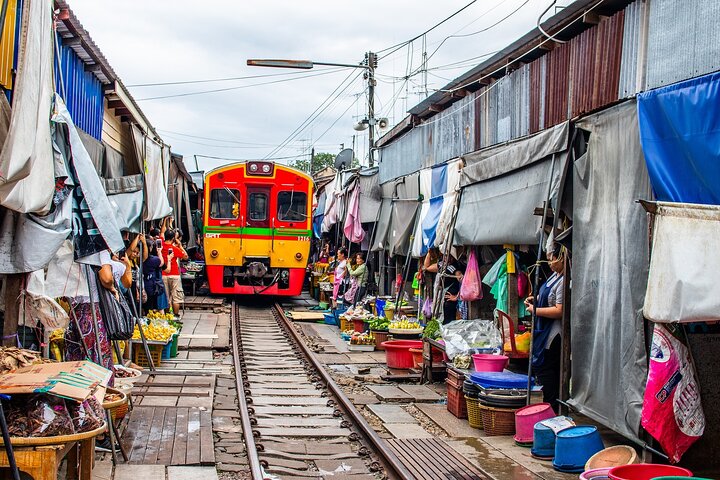
Maeklong Railway Market and Damnoen Saduak Floating Market
From THB 1,080 · Price checked: Aug 2026
The Bangkok day tour I send first-time visitors toward — Maeklong's folding awnings at 8:27am, then Damnoen Saduak before the tour buses arrive. Hotel pickup, set-menu Thai lunch, and a longtail boat through the canals. Check the inclusions list at booking.
Check Availability →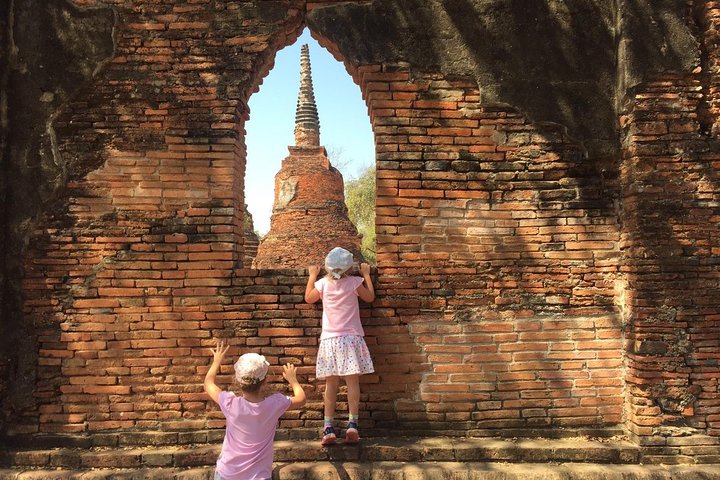
Erawan Falls and River Kwai Combo
From THB 6,500 · Price checked: Aug 2026
The option for visitors who want both waterfalls and history in a single day. Includes hotel pickup from central Bangkok, park entry fees, and a Thai set-menu lunch near the river. Confirm how much time is allowed at Erawan before booking.
Check Availability →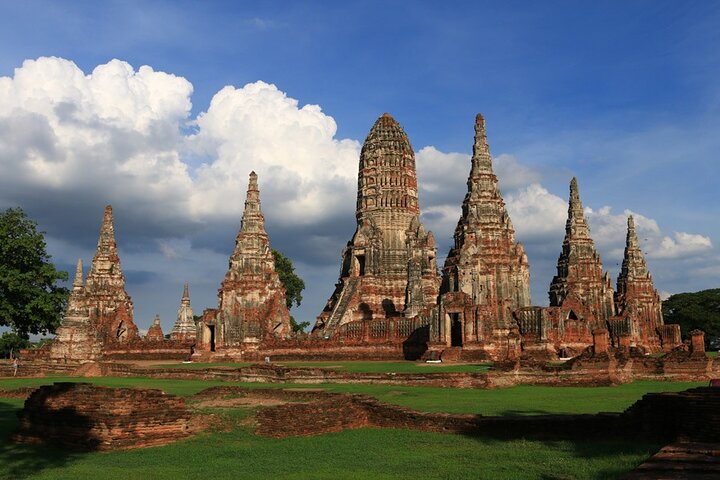
Kanchanaburi and Erawan Falls Day Trip
From $167.13 · Price checked: Aug 2026
The single-day option for visitors who want nature and war history together. Confirm before booking that the itinerary includes the War Cemetery, not just the bridge. Verify hotel pickup coverage, group size, and time at each stop.
Check Availability →Frequently Asked Questions
What is the best day trip from Bangkok for first-time visitors?
The Maeklong Railway Market combined with Damnoen Saduak Floating Market is the most accessible day trip and the one that consistently surprises first-time visitors. The train-watching at 8:27am and the longtail boat ride through the canals are unlike anything in central Bangkok. The drive is roughly 90 minutes each way and most tours include hotel pickup.
How many days do you need in Bangkok for day trips?
Three days is enough for the main day trips: one day for Ayutthaya, one for the floating markets (Maeklong + Damnoen Saduak or Amphawa), and one for either Kanchanaburi or Erawan Falls. Add a fourth day if you want to do both Kanchanaburi and Erawan together or visit Ayutthaya at a slower pace.
What is the best month to visit Ayutthaya?
November through February is the most comfortable, with temperatures between 25 and 32°C and the dry season in full swing. March through May can hit 38°C with no shade between temples. June through October brings afternoon monsoon rain but lower prices and fewer crowds.
Is Amphawa floating market open every day?
No. Amphawa is open Friday, Saturday, Sunday, and on the official Thai holidays posted at the market entrance. Visits on Monday through Thursday will find the canal empty. The evening firefly boat tours also run Friday through Sunday only.
Are Bangkok day tours worth booking in advance?
For Ayutthaya, Kanchanaburi, and Erawan Falls, yes — these tours cap at small group sizes and fill up during peak season (November through February). For the floating markets, walk-up bookings through your hotel the night before usually work, especially in low season.
What should I bring on a Bangkok day trip?
Water (at least 1.5 liters per person), sunscreen, a hat, modest clothing for temple visits (shoulders and knees covered), comfortable walking shoes, and a small towel. Between March and May, bring electrolyte packets and accept that an air-conditioned van is non-negotiable.
Explore More
Related comparisons and guides:
- Bangkok vs Phuket Day Trips: Which Base Is Actually Better for Exploring Thai...
- Bangkok Floating Market Day Trips: Damnoen Saduak, Amphawa, and Which Tour to...
- Bangkok Seasons: A Complete Guide to Weather, Crowds & Day Trips
- Bangkok Costs — A Complete Guide to Day Trips, Timing, and What Actually Works