Bangkok Day Trip Tips: Pickup, Timing, and Route Checks
We earn a commission when you book through our links on Viator (PID P00299531), at no extra cost to you. This is how we keep the site free. Learn more →
Our wider Bangkok guide covers the city side of the trip; this page is about the hours you spend outside it.
What to Know About a Bangkok Day Trip
A Bangkok day trip is a road day on a fixed clock, not a flexible outing you can shift by an hour. Most Bangkok day trip tours include hotel pickup from central Bangkok areas, and the schedule is long at both ends: most day tours from Bangkok depart 6-7am and return 5-7pm. Confirm your pickup zone and that window before you compare anything else about the listing.
Departure hour is the part of the day you control. The drive is not. The Tourism Authority of Thailand's Destinations directory is worth a scan for the provinces you are heading into, since province-level travel notices matter more on a day trip than anything happening in central Bangkok.
Kanchanaburi Full Day Tour: River Kwai and Erawan Falls
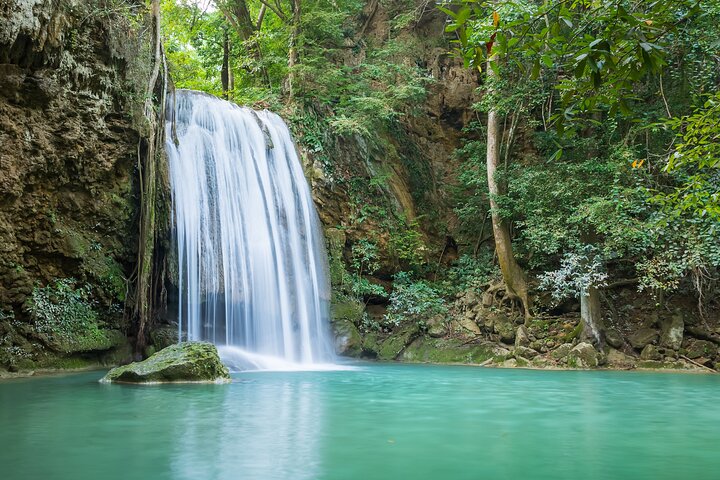
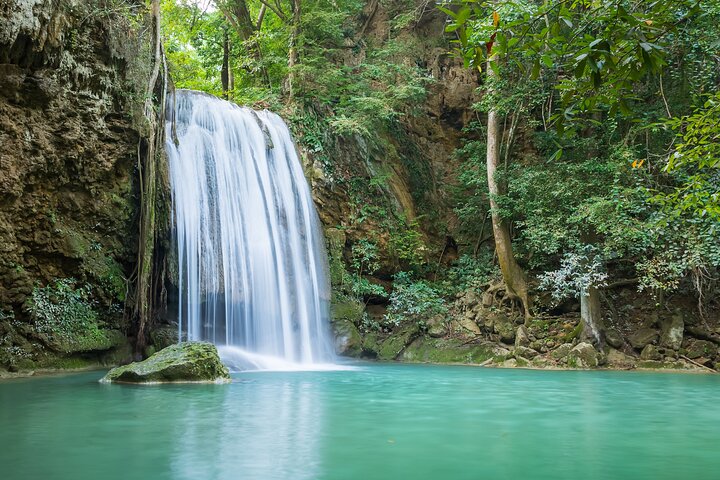
This is the itinerary that pairs Burma Railway history with waterfall time in one outing. The day covers the JEATH War Museum and the Bridge on the River Kwai, then moves to Erawan National Park for its tiered waterfalls, walking trails, and natural pools. The Department of National Parks administers Thailand's national park system, including Erawan, and its official site is the right place to check park access notices before you commit to a date.
One thing is worth holding in mind. The park half asks something physical of you: the higher tiers mean climbing in heat, in whatever shoes you packed that morning.
Skip this format if you want a slow start and a short drive, or if someone in your group will not enjoy uneven trail walking in humid conditions.
Kanchanaburi Full Day Tour: River Kwai and Erawan Falls
From $81.57 · Price checked: Jul 2026
Best for: Travelers who want Burma Railway history and waterfall time combined in one full day from Bangkok.
Not for: Travelers who would rather not spend the day on wartime history sites.
A full day in Kanchanaburi Province taking in the JEATH War Museum and the Bridge on the River Kwai, then Erawan National Park with its seven tiers of waterfalls, walking trails, and natural pools.
Check availabilityExternal booking on Viator · pricing and cancellations handled by Viator
Common Planning Mistakes to Avoid
Three booking assumptions deserve testing before you pay. The first concerns your pickup address, the second concerns your fallback if the van leaves without you, and the third concerns how you will pay once you are outside the city.
Pickup is the one that catches travellers out. Khao San Road area hotels can be excluded from free pickups on budget tours, so a listing that promises hotel pickup has not automatically promised your hotel. If you are staying in that area, read the pickup zone wording line by line, and message the operator with your exact hotel name before booking instead of afterwards.
The fallback assumption is the more serious one. Bangkok's BTS Skytrain and MRT subway do not reach Damnoen Saduak or Maeklong Railway Market, so there is no urban rail line waiting to rescue a missed departure.
Payment is the quiet one. Credit cards are accepted for online bookings but cash is preferred at local markets, which means the tour itself is card territory and everything you buy on the water or beside the tracks is not. Draw baht in small notes before you leave Bangkok, and budget for it alongside the ticket using our Bangkok costs breakdown.
Floating & Railway Market and Coconut Farm Tour [Optional Luxury]
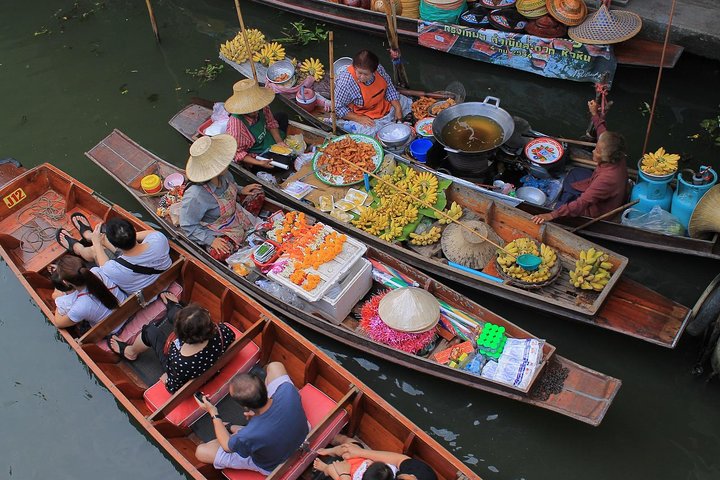
This day chains three different scenes together: a boat ride at Damnoen Saduak, a coconut sugar farm that also produces sea salt, and the railway market where the stalls pull back for the passing train. You can select a standard or a luxury vehicle at booking, which is the clearest fork in this particular listing.
Damnoen Saduak is a tourist market, and the boats are tourist boats. The paddlers working the narrow canals and the sheer density of trade on the water still read as something you have not seen anywhere else, which is why the place survives its own reputation. The railway market is a different pleasure, almost mechanical: the awnings fold back, the train passes close, the awnings return and trading resumes as though nothing happened. The coconut sugar and salt stop is the calmest part of the day and the part most likely to get skimmed if the schedule slips.
Book the standard vehicle instead when you would rather put the difference toward the rest of the trip, because the upgrade changes your ride and not your stops. This tour is not for travellers who want one location and a long unhurried lunch, since the whole day is built on moving between three.
![Floating & Railway Market and Coconut Farm Tour [Optional Luxury] - photo](/images/110403P6.jpg)
Floating & Railway Market and Coconut Farm Tour [Optional Luxury]
From $84.26 · Price checked: Aug 2026
Best for: Travelers who want to choose between a standard and a luxury vehicle for a floating and railway market day.
Not for: Travelers who want only the markets without farm and production stops.
A market day covering a boat ride at Damnoen Saduak, a coconut sugar farm with sea salt production, and the railway market where stalls pull back for the train. Standard or luxury vehicle can be selected.
Check availabilityExternal booking on Viator · pricing and cancellations handled by Viator
Where Each Tour Format Fits
Choose the format by what you want the middle of your day to look like. The Kanchanaburi full day buys war history and waterfall time at the price of the longest drive. The full market day buys variety, with a farm stop between the two market scenes. The half day buys the two markets and hands your afternoon back to Bangkok, which is worth real money on a short trip.
Group size and vehicle type matter more than the itinerary list suggests. A shorter route with an early start puts you at the markets while they are still working rather than performing, and that is a different experience from arriving mid-morning behind four other vans. Compare the full spread on our Bangkok day tours page if none of these three lines up with your dates.
Half-Day Floating Market and Railway Market Tour from Bangkok
What separates this one is the approach. You reach the Maeklong Railway Market by local train, then continue to Damnoen Saduak Floating Market. Arriving on a working train instead of stepping out of a van changes the texture of the morning, and the operator's own listing recommends its earliest departures for fewer tourists and more time at both markets.
Choose the half day if you have a fixed dinner, an evening flight, or a Bangkok plan you would rather not gamble on. This half day is not for travellers who came for Erawan's waterfalls or the River Kwai, because the route goes nowhere near either.
Half-Day Floating Market and Railway Market Tour from Bangkok
From $25.97 · Price checked: Jul 2026
Best for: Travelers who want to reach the railway market by local train and can take an early departure.
Not for: Travelers who cannot take an early departure or want to avoid an early-morning start.
A half day trip reaching the Maeklong Railway Market by local train, then continuing to Damnoen Saduak Floating Market. The operator suggests the 6.00 am or 6.30 am departures for fewer tourists and more time at both markets.
Check availabilityExternal booking on Viator · pricing and cancellations handled by Viator
What to Check Before Booking
Run five checks and you have removed almost everything that goes wrong on a Bangkok day trip. None of them take longer than a few minutes, and four of them are impossible to fix once the vehicle has left your street. Do them in this order, because the first one determines whether the rest of the booking is even usable.
- Pickup zone against your exact hotel. Not the neighbourhood, the specific property name and address, confirmed in writing by the operator.
- The departure and return window against your own calendar. Read the return time as the earliest plausible hour, then leave the evening loose behind it.
- Baht in small notes. The booking is a card transaction; the markets are not.
- Park and weather notices. The Department of National Parks publishes park information, and the Thai Meteorological Department is the source to check before any day built around waterfalls or open boats.
- The vehicle option, where the listing offers one. Decide before checkout, since the standard and upgraded versions cover the same stops.
Season shapes all five. A waterfall day and a market day respond differently to rain, and our Bangkok seasons page is the place to work out which months favour which itinerary. Skip any tour whose pickup zone excludes your hotel, because arranging your own transfer to a meeting point at that hour cancels out the convenience you paid for in the first place.
Explore More
Related comparisons and guides:
Frequently Asked Questions
Does hotel pickup cover every Bangkok hotel?
No, pickup zones are defined per listing and per operator.
Can I reach the floating markets on my own using the Skytrain or subway?
Bangkok's urban rail network does not serve them, so an independent trip means arranging road transport yourself and coordinating it with a very early start. For one day with two market stops, an organised tour removes a logistics problem you would otherwise solve at dawn.
How much cash should I carry?
Bring baht in small notes, because boat vendors and market stalls are not set up for card payments and change for large notes is awkward. Keep the card for anything you book online in advance.
Kanchanaburi or a market day if I only have room for one?
Take Kanchanaburi if you want history and water and can absorb the longest drive of the three; take a market day if you want a shorter road commitment and more scenes per hour. They are not competing versions of the same trip.
Is the luxury vehicle upgrade worth paying for?
It changes your comfort on the road, not the stops or the time you get at each one. If the drive itself is the part you dread, the upgrade earns its place; otherwise the standard option delivers the same day.
Written from Bangkok, Thailand.
Niran Chantra
Bangkok local · 300+ day trips across Thailand