Phi Phi Tour Listings in Phuket: Itinerary Formats and Departure Details to Verify
We earn a commission when you book through our links on Viator (PID P00299531), at no extra cost to you. This is how we keep the site free. Learn more →
I Didn't Expect Phuket to Feel Like This
Phi Phi listings out of Phuket define themselves by stops and inclusions, not by departure tier. The product records name the islands visited, the meal served, the guiding languages and the transfer arrangement. Departure time, pickup window and the running order of stops are details you confirm with the operator, because the listings on this page do not state them.
That distinction matters more than the marketing images. Two Phi Phi speedboat days can share Maya Bay and Pileh Lagoon on paper and still feel like different trips, because one leans on beach time at a smaller number of stops while another threads together a long chain of bays. Read the stop list as the real itinerary, then treat everything else as a question for the operator.
The Phi Phi islands sit inside protected national park water, and the Department of National Parks is the authority for park access and entry fees, not the tour operator. Sea conditions are a separate question again: the Thai Meteorological Department publishes Andaman Sea weather and storm warnings, and a speedboat day is the format most exposed to them. Skip this format if you need a guaranteed calendar date with no tolerance for a weather cancellation, since an open-sea speedboat run is the first thing a port authority stands down.
Island Cruise from Phuket to Phi Phi Islands with Maya Bay Visit: The Tour That Saved My Trip
This one reads as a beach-forward day rather than a stop-counting marathon. The record states breakfast on the beach at Maya Bay, a swim stop at Pileh Lagoon, snorkeling stops, monkeys in their natural habitat, Viking Cave, and time on a private island to close the day. The group size is stated on the card, and it is the specification worth reading before anything else in this listing.
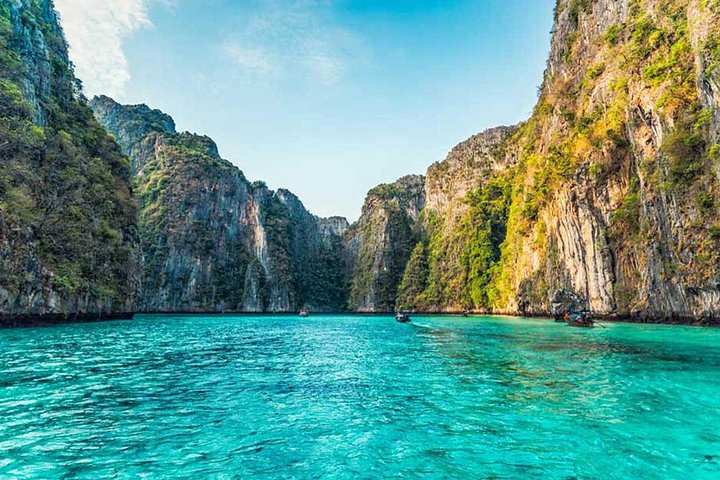
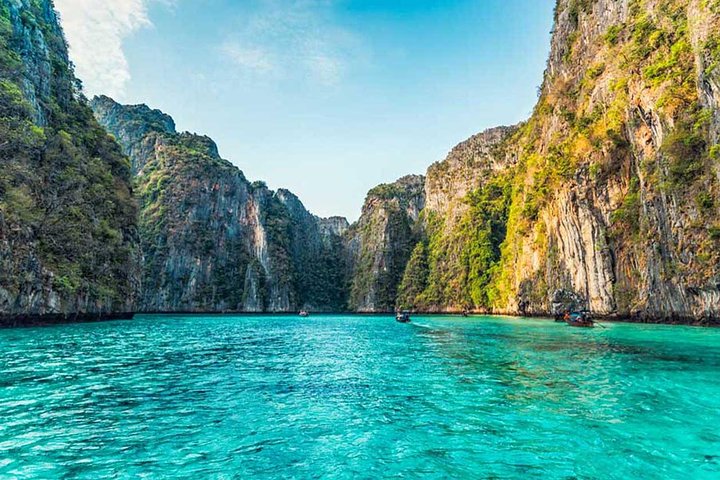
Island Cruise from Phuket to Phi Phi Islands with Maya Bay Visit
From $164.81 · Price checked: Aug 2026
Best for: Travelers who want a speedboat trip to Maya Bay with a smaller group, averaging 15 people and capped at 18.
Not for: Travelers visiting in August or September, when Maya Bay closes and Bamboo Island is visited instead.
A speedboat day from Phuket with breakfast on the beach at Maya Bay, a swim stop at Pileh Lagoon, two snorkeling stops, monkeys in their natural habitat, and Viking Cave, ending with time on a private island. Groups average 15 people and are capped at 18.
Check availabilityExternal booking on Viator · pricing and cancellations handled by Viator
The Moments That Made Phi Phi tour listings in Phuket Worth the Trip
Whether lunch is a buffet reserved for your boat, whether snorkeling gear and fins are provided, whether hotel transfers are handled and whether a guide speaks your language are all stated in the product record. These are the lines that separate a smooth day from an improvised one, and they are verifiable before you pay.
Phi Phi Islands Adventure Day Trip w/ Seaview Lunch by V. Marine: A Lesser-Known Tour Worth Discovering
The strongest thing in this record is the service detail. English and Japanese speaking guides, a seaview buffet lunch reserved for this operator's guests, and a new snorkel mouthpiece provided for each guest are specific commitments, not atmosphere. Soft drinks, fruit, snacks, snorkeling equipment, fins, life jackets, hotel transfers and insurance are included, and special dietary meals require an advance request.
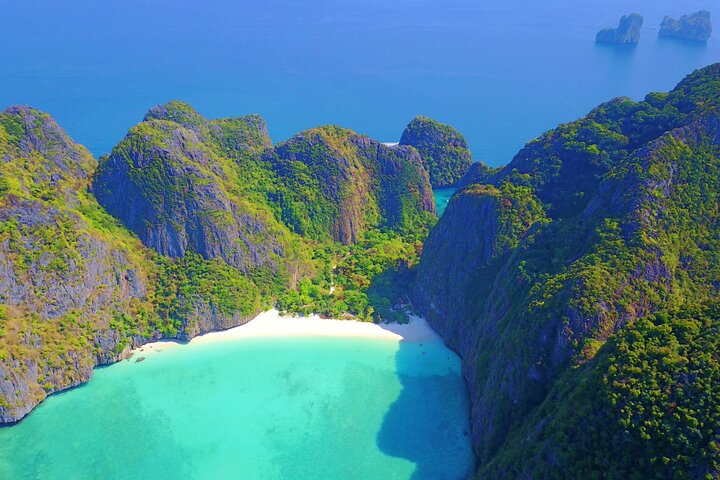
Phi Phi Islands Adventure Day Trip w/ Seaview Lunch by V. Marine
From $78.64 · Price checked: Aug 2026
Best for: Travelers who need dietary accommodations such as halal, vegetarian, vegan, gluten free, dairy free, or allergy-friendly meals arranged in advance.
Not for: Travelers who would rather arrange their own lunch and transfers.
A Phi Phi Islands day trip with English and Japanese speaking guides and a seaview buffet lunch reserved for this operator's guests. A new snorkel mouthpiece is provided for each guest, and soft drinks, fruit, snacks, snorkeling equipment, fins, life jackets, hotel transfers, and insurance are included; special dietary meals require an advance request.
Check availabilityExternal booking on Viator · pricing and cancellations handled by Viator
What Surprised Me About Phuket
The widest gap between Phi Phi listings is not quality, it is density. Some speedboat days name a long chain of bays and beaches, others name a handful and stay longer at each. Neither is superior, and the product records make the choice readable: count the named stops, then ask yourself how much time you want standing on sand versus moving between anchorages.
Maya Bay adds its own variable. One of the listings below states plainly that Maya Bay closes annually for environmental restoration, which is a real constraint, not a disclaimer. The Department of National Parks is the source to check for park closures and access rules if Maya Bay is the reason you are booking at all. Skip this format if a Maya Bay landing is non-negotiable for your dates and you have not confirmed the park status first.
A Multi-Stop Speedboat Day from Green Island to Khai Island
This is the dense end of the spectrum. The record covers Green Island, Loh Samah Bay, Pileh Lagoon, Viking Cave, Phi Phi Don, Monkey Beach, Nui Bay and Khai Island, with time for snorkeling, swimming and white sand beaches, and lunch included.
Best of Phi Phi Island Adventure Day Tour with Lunch from Phuket
From $48 · Price checked: Aug 2026
Best for: Travelers who want a speedboat day covering many Phi Phi sites with snorkeling and beach time.
Not for: Travelers who prefer fewer stops at a slower pace.
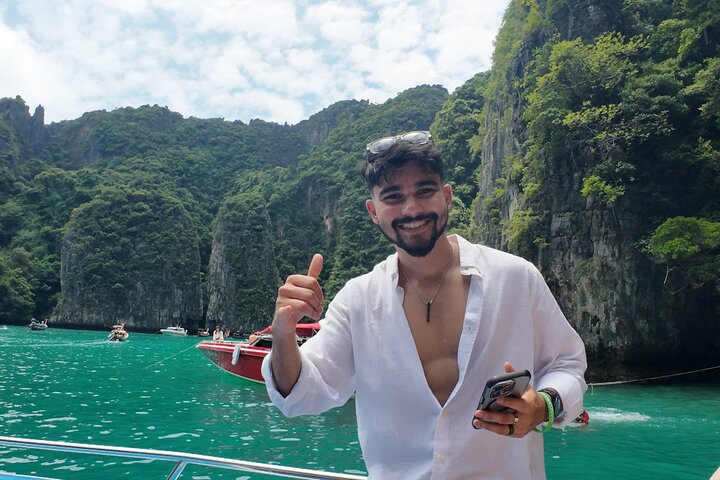
A full day by speedboat from Phuket to the Phi Phi Islands taking in Green Island, Loh Samah Bay, Pileh Lagoon, Viking Cave, Phi Phi Don, Monkey Beach, Nui Bay, and Khai Island. There is time for snorkeling, swimming, and white sand beaches, and lunch is included.
Check availabilityExternal booking on Viator · pricing and cancellations handled by Viator
A Speedboat Route Through Pileh Lagoon, Bamboo Island and Monkey Beach
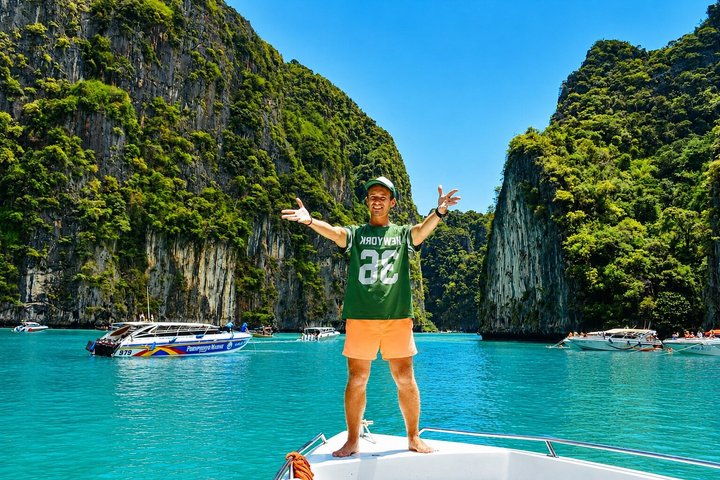
This listing works through several islands of the Phi Phi archipelago in the Andaman Sea, with swimming and snorkeling at Pileh Lagoon, beach time on Bamboo Island, sightseeing at Monkey Beach, and a visit to Maya Bay. Buffet lunch, snacks, snorkeling equipment and life jackets are included, and the record states the annual Maya Bay closure for environmental restoration.
Phi Phi, Maya Bay & Khai Islands Speedboat Tour from Phuket
From $42.74 · Price checked: Aug 2026
Best for: Travelers who want four islands in one day, including Pileh Lagoon, Bamboo Island, Monkey Beach, and Maya Bay.
Not for: Travelers visiting between August 1 and October 1, when landing at Maya Bay is not permitted.
A full day speedboat tour from Phuket through four islands of the Phi Phi archipelago in the Andaman Sea, with swimming and snorkeling at Pileh Lagoon, beach time on Bamboo Island, sightseeing at Monkey Beach, and a visit to Maya Bay. Buffet lunch, snacks, snorkeling equipment, and life jackets are included, and Maya Bay closes annually for environmental restoration.
Check availabilityExternal booking on Viator · pricing and cancellations handled by Viator
Niran Chantra's Insider Tips for Getting It Right
Pickup arrangements, meeting points and departure timing are operator-held information on these listings. Ask once, in writing, after booking, and you remove the single largest source of day-of confusion on a Phuket island trip.
Where you stay on Phuket shapes how a hotel transfer works, and a transfer that is included in one listing is not automatically offered in another. Our Phuket day trip guide covers how island days fit around arrival and departure days, and the island hopping comparison is the place to start if you are still deciding between routes rather than operators. For regional background on the province and its islands, the Tourism Authority of Thailand destination pages are the official reference.
What to Check Before Booking
Four checks cover the ground these listings leave open. None of these are guesses you should make from a photo gallery.
Two further checks are seasonal rather than operational. Look at the Tourism Authority of Thailand for travel advisories covering your dates, and check the Department of National Parks for the Maya Bay restoration closure if that stop is central to your plan. Both take a few minutes and both can save a booking.
One last judgement call. If you are weighing a Phi Phi day against the limestone scenery closer to the mainland, the Phi Phi versus James Bond Island comparison makes that choice cleaner, and our Phuket tips cover the practical side of basing yourself on the island. Choose a guided format with stated inclusions if this is your first island day in the Andaman, and leave the improvised pier-side booking for a trip where a lost morning costs you nothing.
Verified Viator listings on this page: 4
Explore More
Related comparisons and guides:
Frequently Asked Questions
Do Phi Phi listings from Phuket state a departure time?
The product records on this page describe stops, meals, guiding and transfers, and they do not publish a departure tier. Confirm your exact departure and pickup arrangement with the operator once your booking is made.
Is Maya Bay open all year?
One of the listings here states that Maya Bay closes annually for environmental restoration, so a Maya Bay stop is conditional on your dates. The Department of National Parks is the authority to check for current park access before you commit.
Can a Phi Phi day trip handle halal, vegetarian or allergy-friendly meals?
The V. Marine trip accepts special dietary meal requests, provided they are made in advance rather than on the day. Lodge the request at the time of booking so the kitchen has it before the boat leaves.
Is snorkeling equipment provided or do I bring my own?
Snorkeling equipment and life jackets are stated as included across these listings, and the V. Marine trip additionally provides a new snorkel mouthpiece for each guest. Bringing your own mask is still reasonable if you need a prescription lens or a specific fit.
Are hotel transfers included from anywhere on Phuket?
Hotel transfers are stated in the V. Marine listing, and coverage depends on where your accommodation sits. Send the operator your hotel name before travel day so the pickup zone is confirmed, not assumed.
What should I check about the weather before a speedboat day?
The Thai Meteorological Department publishes Andaman Sea weather and storm warnings, which is the relevant signal for an open-water speedboat trip. Check it the evening before and keep a flexible alternative day in your itinerary.
Written from Bangkok, Thailand.
Niran Chantra
Bangkok local · 300+ day trips across Thailand