Chiang Mai Seasons: When to Visit for Day Trips in Northern Thailand

We earn a commission when you book through our links on Viator (PID P00299531), at no extra cost to you. This is how we keep the site free. Learn more →
Chiang Mai does not have one weather story. It has three, and the month you pick decides which version of a day trip you are buying. A mountain summit day, a forest temple hike and a run of temples out to Chiang Rai each behave differently across those three windows. The useful question is not which season is good. The better question is which window suits the itinerary you want, and which parts of that itinerary need verifying closer to the date.
Chiang Mai's Three Seasons and What Each One Does to a Day Trip
Day trips here sort into three planning windows. According to the Tourism Authority of Thailand, Thailand weather consists of six months of rainfalls during the wet season, three months of dry and cooling breezes during the winter, and three months of heat during the summer. Northern Thailand follows that same three-part shape.
The windows break down cleanly. November to February is the cool-season planning window. March to May covers the hot-season window. June to October is the wet-season window. Each label is a bucket for choosing a month, not a forecast for your dates, and the Thai Meteorological Department is where you check the forecast before booking.
Our Chiang Mai day trip guide compares the formats if you want to line them up before committing.
Chiang Mai - Doi Inthanon Full day Tour: Strongest in the Cool-Season Window
Doi Inthanon is a full day built around the highest point in Thailand, and it stacks a waterfall, a traditional hill tribe village, the King and Queen Royal Pagodas with their gardens, and a nature trail walk through forest into one itinerary. A day that leans on altitude and open ground is the one I would put in the cool-season window if my dates allow it, because the dry, cooling months the Tourism Authority of Thailand describes are the ones that suit exposed walking.
Two things from the product record deserve attention before you book. The national park fee and the twin pagodas fee are not included, so plan for them as separate cash costs. Our Chiang Mai costs page sets out what these day-trip extras look like alongside the rest of your budget.
This one is a poor fit for travellers who want a single focused stop. The itinerary moves through a waterfall, a village, the pagodas and a forest trail, so a visitor whose whole interest is one temple will get more from a shorter mountain trip. Booking it on an arrival or departure date also asks too much of the schedule.

Chiang Mai - Doi Inthanon Full day Tour
From $43.14 · Price checked: Aug 2026
Best for: Travelers who want Thailand's highest point along with a waterfall, a hill tribe village, and the twin royal pagodas.
Not for: Travelers who want all fees covered, since park and pagoda entrance fees are paid in cash on the day.
A full day tour to Doi Inthanon, the highest point in Thailand at 2,565 meters, with a waterfall, a traditional hill tribe village, the King and Queen Royal Pagodas and their gardens, and a nature trail walk through forest. The national park fee of THB 300 and the twin pagodas fee of THB 100 per person are not included.
Check availabilityExternal booking on Viator · pricing and cancellations handled by Viator
The Low-Season Case for Chiang Mai Day Trips
Hot-season and wet-season months still support day trips, and the forest and temple formats carry those windows better than a summit day does. March to May is the hot-season planning window, June to October the wet-season one. Both call for a Thai Meteorological Department check close to your date, since the Tourism Authority of Thailand describes six months of rainfalls in the annual pattern.
Chiang Mai - Doi Suthep Temple & Wat Pha Lat Hike: Works Outside the Cool Season
This day pairs a hike to Wat Pha Lat, a forest temple on Doi Suthep set in a garden with statues, with Doi Suthep Temple itself and the mountaintop view over the city. Tree cover on the Wat Pha Lat approach is the detail I would weigh in the hotter months, and the temples themselves hold their interest without a clear horizon, which is more than a pure viewpoint day can claim.
Transport is by songthaew, a converted pick-up truck with bench seating, open sides and no air conditioning. Entrance fees are paid in cash on the day, so carry small notes with you instead of relying on a card. Our Chiang Mai transport guide explains how songthaews work if you have never ridden in one.
Not for travellers who need air conditioning between stops, and not for anyone who would prefer a vehicle to the front door of a temple. Open sides mean weather reaches you on the way up, and Wat Pha Lat is reached on foot.

Chiang Mai - Doi Suthep Temple & Wat Pha Lat Hike
From $24.83 · Price checked: Aug 2026
Best for: Travelers willing to hike to Wat Pha Lat and travel by open-sided songthaew.
Not for: Travelers who need air-conditioned transport or want to skip the walk.
A hike to Wat Pha Lat, a forest temple on Doi Suthep set in a garden with statues, followed by Doi Suthep Temple and the mountaintop view over the city. Transport is by songthaew, a converted pick-up truck with bench seating, open sides, and no air conditioning; entrance fees of THB 50 and THB 100 per person are paid in cash on the day.
Check availabilityExternal booking on Viator · pricing and cancellations handled by Viator
Chiang Rai White Temple, Blue Temple and More from Chiang Mai: The Road Day
This one leaves Chiang Mai for the White Temple, the Blue Temple and the Red Temple complex with its panoramic views. A day built around road travel and built sites leans less on trail conditions than a mountain walk does, which is why I treat it as the flexible option across all three planning windows. The tour is run by a GSTC-certified sustainable platform with a focus on lower-impact travel, worth knowing if operator standards factor into how you choose.
Choose a closer mountain or temple day if you want to stay near the city. This itinerary spends its time travelling out to temple sites and between them, and travellers who want an afternoon free in Chiang Mai will find the shape of the day works against them.
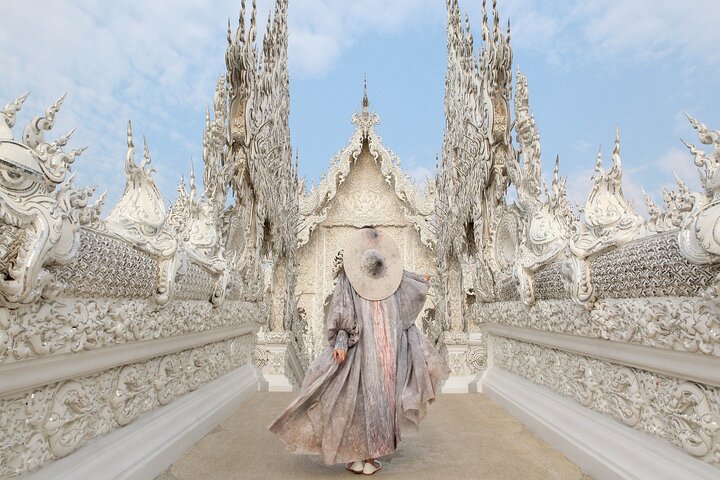
Chiang Rai White Temple, Blue Temple and more from Chiang Mai
From $33 · Price checked: Aug 2026
Best for: Travelers who want Chiang Rai's White Temple, Blue Temple, and Red Temple complex from Chiang Mai.
Not for: Travelers wanting a Doi Inthanon or Doi Suthep day.
A day trip from Chiang Mai to the White Temple, the Blue Temple, and the Red Temple complex with its panoramic views. The tour is run by a GSTC-certified sustainable platform with a focus on lower-impact travel.
Check availabilityExternal booking on Viator · pricing and cancellations handled by Viator
Packing for the Window You Booked
Packing follows the planning window more closely than it follows the itinerary. Cool-season months call for a layer you can add on a mountain day. Hot-season months call for sun cover and more water than you think you need. Wet-season months call for rain protection and footwear that copes with wet ground. Cash belongs in every version of the list.
What to Check Before Booking
Five checks cover the ground. Match your planning window to the itinerary, verify the forecast with the Thai Meteorological Department close to the date, check the Tourism Authority of Thailand for festival dates that fall in your window, confirm which fees sit outside the booking, and confirm how you are travelling between stops.
The forecast check is the one people leave too late or skip on the assumption that a month label carries it. A seasonal window tells you what the year does in aggregate. It says nothing about the Tuesday you booked. Look at the Thai Meteorological Department in the days before you travel, and treat that as a separate step from the decision you made when you picked your dates.
Transport format is the check travellers skip most easily. The Doi Suthep and Wat Pha Lat day runs on a songthaew with open sides and no air conditioning, which reads differently in the hot-season window than it does in the cool months. Our Chiang Mai temple and mountain tours page lays the formats side by side.
Explore More
Related comparisons and guides:
Frequently Asked Questions
When is the cool-season planning window in Chiang Mai?
November to February is the cool-season planning window for Chiang Mai day trips. Treat it as a bucket for choosing a month and check the Thai Meteorological Department forecast before you book specific dates.
Can I do the Doi Inthanon day trip in the wet season?
Yes, the itinerary runs across the year, but a day that includes a waterfall, a forest nature trail and the royal pagodas gives you more on a clear day. Check the Thai Meteorological Department forecast before committing to a wet-season date.
Do I need cash for these Chiang Mai day trips?
Yes for two of them. The Doi Suthep and Wat Pha Lat day collects its entrance fees in cash on the day, and the Doi Inthanon day leaves the national park fee and the twin pagodas fee outside the booking.
What is a songthaew and does it matter which season I ride one in?
A songthaew is a converted pick-up truck with bench seating, open sides and no air conditioning, used for transport on the Doi Suthep and Wat Pha Lat day. Open sides mean the weather in your chosen window reaches you during the ride.
Which Chiang Mai day trip is least dependent on the weather?
The Chiang Rai trip to the White Temple, the Blue Temple and the Red Temple complex is built around road travel and built sites, so trail conditions do not shape it the way they shape a mountain day.
Where should I check current Chiang Mai weather before travelling?
Use the Thai Meteorological Department for forecasts, monsoon and storm warnings. The Tourism Authority of Thailand is the source for festival dates and travel advisories in your planning window.
Written from Bangkok, Thailand.

Niran Chantra
Bangkok local · 300+ day trips across Thailand